It's been a while since I've been here... blogging in the ether... but it's been for a good cause. I have been working hard on finishing my book. I had no idea just how difficult it would be to write an entire book that makes sense and has a beginning... a middle... and, of course, an end. Now that I am nearing completion I must say that I am proud that I will be finished with the final editing within a few months.
In the interim we have all grown... lived our lives... confronted our issues and become a greater part of the recovery community. There have been ups and downs... all relationships have times when we feel stuck... but we drag out the old tools... clean off the rust and begin using them once again.
Even if our tools have become so rusty that we have forgotten what to do with them, we can soak them in a bit of WD40 overnight and get them lubricated and moving once again. How do we do that? We pull out our old recovery materials and reread the pieces that have meaning to us in the present. Maybe we are dealing with frustration ~ this book is taking me forever ~ or anger ~ another day of writer's block... ugh! Regardless, we have tools to get us through those times when our emotions are screaming that we are overwhelmed and our head is telling us to take a time out and practice self care.
No matter how long we have been in recovery... days, weeks, months or even years... it makes no difference. We can become overwhelmed in a matter of moments and forget our tools. We need only to be reminded that they are always there waiting for us to take them out of the tool bag and put them to good use!!
Showing posts with label issues. Show all posts
Showing posts with label issues. Show all posts
Thursday, April 19, 2012


Wednesday, November 24, 2010
Holidays… Ugh!!
How do we cope with our strong feelings when we are dealing with someone who is unaware of how their behavior affects others?
Often times we are forced to deal with people… especially in family situations and surrounding holidays events… who are unaware of how their actions appear to others. It is common for us to believe that our intentions are visible, when in fact it is only our actions that can be seen and felt by those around us.
If others are feeling overwhelmed and their actions impact us, what can we do to practice self care? We use our tools… deep breathing… taking a walk… calling a friend… journaling… prayer… letting go. If necessary we give ourselves permission to leave the situation and take a time out until we feel more balanced. We cannot be emotionally present for others if we are not practicing self care. If practical, we can return once we are centered to discuss the situation in an attempt to resolve issues.
Part of self care is effectively managing expectations. If we have a history of unresolved issues involving family, we must learn to expect whatever family dynamics exist to continue. We can choose not to participate in unhealthy situations. We expect many change back messages from those who are uncomfortable with our growth. We can understand their discomfort… empathize… and still maintain our healthy boundaries.
The holidays can be an especially trying time as we interact with our family of origin. Old issues that lie beneath the surface may be triggered by interactions with siblings, parents or extended family. We owe it to ourselves to use our tools, practice self care and manage expectations. In this way we have the ability to spend our time with our families while still maintaining healthy boundaries and working on more positive interactions.
Often times we are forced to deal with people… especially in family situations and surrounding holidays events… who are unaware of how their actions appear to others. It is common for us to believe that our intentions are visible, when in fact it is only our actions that can be seen and felt by those around us.
If others are feeling overwhelmed and their actions impact us, what can we do to practice self care? We use our tools… deep breathing… taking a walk… calling a friend… journaling… prayer… letting go. If necessary we give ourselves permission to leave the situation and take a time out until we feel more balanced. We cannot be emotionally present for others if we are not practicing self care. If practical, we can return once we are centered to discuss the situation in an attempt to resolve issues.
Part of self care is effectively managing expectations. If we have a history of unresolved issues involving family, we must learn to expect whatever family dynamics exist to continue. We can choose not to participate in unhealthy situations. We expect many change back messages from those who are uncomfortable with our growth. We can understand their discomfort… empathize… and still maintain our healthy boundaries.
The holidays can be an especially trying time as we interact with our family of origin. Old issues that lie beneath the surface may be triggered by interactions with siblings, parents or extended family. We owe it to ourselves to use our tools, practice self care and manage expectations. In this way we have the ability to spend our time with our families while still maintaining healthy boundaries and working on more positive interactions.
Sunday, November 21, 2010
Support - Balcony People
When our relationships hit a rough spot how do we cope? What do we do to garner support?
We reach out to those who have gone before us... counselors... friends... folks we meet in group or at meetings. We read books and articles written by those with wisdom and experience. We search our soul for realization of our part.
Relationships are like a dance... we must see our steps clearly. We must look with eyes unclouded by poor judgement and unresolved issues to see truth. It isn't easy to see our part... especially if we are hurt, sad or angry... but if we are to come through the difficult times back to a state of joy we must accept that we too have contributed to the problems we face... that our partner is not the only one to blame.
As we point our finger at our partner we realize that three fingers point right back at us. We too share in the issues... have perpetrated the hurts... have added to the pain. If we are to clear the air and begin anew we must own our part of the problem.
As we go through the toughest part of the process we know that there is light at the end of the tunnel... and it isn't an oncoming train.
Many have survived the road we are walking. They are all here with hands outstretched... reaching for us... cheering us on as we do the next right thing... as we walk the talk.
Yes, it's humbling... and jumbling too. We feel confused... angry... sad... hurt... devastated... overhwelmed... depressed... and much more. But there are so many watching us take one step at a time... praying for us... pleading with us not to give up.
They are all here along the side of the path... cheering... shouting our name in joy... waiting for us to come far enough along that we too can join on the sidelines and begin to cheer for the next one to walk this long and winding road.
They are shouting... Can you hear us? Can you see us?
We reach out to those who have gone before us... counselors... friends... folks we meet in group or at meetings. We read books and articles written by those with wisdom and experience. We search our soul for realization of our part.
Relationships are like a dance... we must see our steps clearly. We must look with eyes unclouded by poor judgement and unresolved issues to see truth. It isn't easy to see our part... especially if we are hurt, sad or angry... but if we are to come through the difficult times back to a state of joy we must accept that we too have contributed to the problems we face... that our partner is not the only one to blame.
As we point our finger at our partner we realize that three fingers point right back at us. We too share in the issues... have perpetrated the hurts... have added to the pain. If we are to clear the air and begin anew we must own our part of the problem.
As we go through the toughest part of the process we know that there is light at the end of the tunnel... and it isn't an oncoming train.
Many have survived the road we are walking. They are all here with hands outstretched... reaching for us... cheering us on as we do the next right thing... as we walk the talk.
Yes, it's humbling... and jumbling too. We feel confused... angry... sad... hurt... devastated... overhwelmed... depressed... and much more. But there are so many watching us take one step at a time... praying for us... pleading with us not to give up.
They are all here along the side of the path... cheering... shouting our name in joy... waiting for us to come far enough along that we too can join on the sidelines and begin to cheer for the next one to walk this long and winding road.
They are shouting... Can you hear us? Can you see us?
Wednesday, November 17, 2010
Taking Poison - Resentment & Bitterness
How do we cope with angry feelings in our partnership? What can we do to keep those angry feelings from becoming resentment or bitterness?
After reading a thoughtfully written quote it occurred that resentment and bitterness are one of the most important topics in relationships. The quote basically said, "Resentment is like taking poison and waiting for the other person to die."
What a concept... we want to be compassionate in our relationships. We want to be loving and filled with warmth. But what happens when our trust is violated in some way and we feel the sting of betrayal. How do we cope with our feelings without becoming bitter and resentful?
One of our most basic tools is counseling. We must choose to avail ourselves of assistance when we face a situation that we cannot handle with the tools we currently possess. We may need a safe place to express our anger... to work through our feelings... so that we don't poison our relationship. If our partner has betrayed us in some way we have a choice to make. Is this betrayal a deal breaker? Or do we and our partner want to salvage the relationship?
Contrary to what others in our lives may believe there is no right answer for this question. Each partnership is unique. What works for one may not work for another. Partners must decide how much of a commitment they have made to the relationship and what they are willing to do to work through the issues that present themselves. For some, betrayal of any kind is more than they are willing to forgive. For others there is compassion and forgiveness. Neither are right... just different.
When we arrive at a decision with our partner and the help of a counselor, giving our best efforts to the situation is imperative. Anger is an appropriate emotion following betrayal. It requires a safe environment in which to be expressed. Once the anger has been fully explored and the underlying issues revealed healing can begin.
Avoiding resentment and bitterness may take a great deal of effort, but in the long run it is worth the work... our relationship and our health depend upon it.
After reading a thoughtfully written quote it occurred that resentment and bitterness are one of the most important topics in relationships. The quote basically said, "Resentment is like taking poison and waiting for the other person to die."
What a concept... we want to be compassionate in our relationships. We want to be loving and filled with warmth. But what happens when our trust is violated in some way and we feel the sting of betrayal. How do we cope with our feelings without becoming bitter and resentful?
One of our most basic tools is counseling. We must choose to avail ourselves of assistance when we face a situation that we cannot handle with the tools we currently possess. We may need a safe place to express our anger... to work through our feelings... so that we don't poison our relationship. If our partner has betrayed us in some way we have a choice to make. Is this betrayal a deal breaker? Or do we and our partner want to salvage the relationship?
Contrary to what others in our lives may believe there is no right answer for this question. Each partnership is unique. What works for one may not work for another. Partners must decide how much of a commitment they have made to the relationship and what they are willing to do to work through the issues that present themselves. For some, betrayal of any kind is more than they are willing to forgive. For others there is compassion and forgiveness. Neither are right... just different.
When we arrive at a decision with our partner and the help of a counselor, giving our best efforts to the situation is imperative. Anger is an appropriate emotion following betrayal. It requires a safe environment in which to be expressed. Once the anger has been fully explored and the underlying issues revealed healing can begin.
Avoiding resentment and bitterness may take a great deal of effort, but in the long run it is worth the work... our relationship and our health depend upon it.
Wednesday, November 10, 2010
Moving Beyond Betrayal
How do we move past the pain and loss of betrayal? Can we salvage our relationship or is betrayal the kiss of death?
Not all betrayal involves emotional or physical affairs. Some betrayal involves more subtle violations that can occur slowly and painfully over many years. Drug and alcohol abuse can fall into this category, as can gambling or any other addiction.
The first step in determining whether we can move beyond betrayal is to determine why our partner strayed from their promises in the first place. This may be an area requiring the assistance of a counselor. We may be unable to figure out what was lacking either in our partner or in our relationship without help. We must keep in mind that some betrayal occurs because of a issue within our partner... and some occurs because of an issue within the relationship. To avoid a repeat of the problem, discerning the underlying cause is paramount.
Once we have clarified why the betrayal happened we will be able to determine if a repair of the relationship is possible or desirable. At this point we have the information we need to make an informed decision. We must decide if the betrayal is a deal breaker... or just an issue needing work than can be healed by time and effort.
Some relationships rebound from betrayal with increased intimacy and trust... others dissolve. It is our decision based upon the information we have gathered that will determine which outcome is best for our particular situation. All relationships are unique. A counselor can assist in clarifying the issues present and in facilitating communication, but only the partners involved can decide what is best for their situation.
Reaching out for help when relationships falter can save partners from a future of pain or bring one of joy.
Not all betrayal involves emotional or physical affairs. Some betrayal involves more subtle violations that can occur slowly and painfully over many years. Drug and alcohol abuse can fall into this category, as can gambling or any other addiction.
The first step in determining whether we can move beyond betrayal is to determine why our partner strayed from their promises in the first place. This may be an area requiring the assistance of a counselor. We may be unable to figure out what was lacking either in our partner or in our relationship without help. We must keep in mind that some betrayal occurs because of a issue within our partner... and some occurs because of an issue within the relationship. To avoid a repeat of the problem, discerning the underlying cause is paramount.
Once we have clarified why the betrayal happened we will be able to determine if a repair of the relationship is possible or desirable. At this point we have the information we need to make an informed decision. We must decide if the betrayal is a deal breaker... or just an issue needing work than can be healed by time and effort.
Some relationships rebound from betrayal with increased intimacy and trust... others dissolve. It is our decision based upon the information we have gathered that will determine which outcome is best for our particular situation. All relationships are unique. A counselor can assist in clarifying the issues present and in facilitating communication, but only the partners involved can decide what is best for their situation.
Reaching out for help when relationships falter can save partners from a future of pain or bring one of joy.
Sunday, March 28, 2010
$9 Million Awarded to Betrayed Partner From Paramour
Is it an effective remedy to award monetary damages from the paramour to the betrayed partner?
People betray others in relationships. This is a fact that is not new to mankind. Betrayal is not limited to adultery... there are plenty of ways to betray one's partner. This particular monetary award is about adultery.
When we seek out counseling we almost never talk about our own involvement in the betrayal. We are obsessed with blame and anguish. It is expected and understandable... we are suffering with extreme levels of pain and loss.
As time passes and the hurt begins to heal, our ability to see our own piece in the puzzle, no matter how tiny, begins to clarify. It is at this point that we start to have the ability to let go of the pain and loss and true healing can begin.
What happens when we never let go of the pain and loss? We stay angry. Over time that anger hardens into bitterness and resentment. Bitter resentful people don't move on from living in the past. We don't enjoy the present because we are too busy embracing our righteous path of constantly remembering how we were wronged.
One who pursues this type of monetary reward is still living with their focus in the past. There may be a real need for funds... that is not the issue. There are many ways to get the funds that have been awarded and not paid via family court routes. This award is about punishment and retribution.
My question is... when this case is over and the betrayed partner has collected whatever they get of the $9 Million...
Will they then live in the present?
Will they then feel happy?
Will they then be a whole person?
I think not... they will still feel the bitterness and resentment that they have chosen to focus on for so long... because money can't fix that.
Money is a tool. It can be used for constructive or destructive purposes.
It has no intrinsic value of it's own.
People betray others in relationships. This is a fact that is not new to mankind. Betrayal is not limited to adultery... there are plenty of ways to betray one's partner. This particular monetary award is about adultery.
When we seek out counseling we almost never talk about our own involvement in the betrayal. We are obsessed with blame and anguish. It is expected and understandable... we are suffering with extreme levels of pain and loss.
As time passes and the hurt begins to heal, our ability to see our own piece in the puzzle, no matter how tiny, begins to clarify. It is at this point that we start to have the ability to let go of the pain and loss and true healing can begin.
What happens when we never let go of the pain and loss? We stay angry. Over time that anger hardens into bitterness and resentment. Bitter resentful people don't move on from living in the past. We don't enjoy the present because we are too busy embracing our righteous path of constantly remembering how we were wronged.
One who pursues this type of monetary reward is still living with their focus in the past. There may be a real need for funds... that is not the issue. There are many ways to get the funds that have been awarded and not paid via family court routes. This award is about punishment and retribution.
My question is... when this case is over and the betrayed partner has collected whatever they get of the $9 Million...
Will they then live in the present?
Will they then feel happy?
Will they then be a whole person?
I think not... they will still feel the bitterness and resentment that they have chosen to focus on for so long... because money can't fix that.
Money is a tool. It can be used for constructive or destructive purposes.
It has no intrinsic value of it's own.
Monday, March 22, 2010
It's Okay for Me to Have Needs Too?
My partner seems to forget special occasions... I feel badly yet I don't say anything about it. Should I mention it... or is it unimportant? I feel appreciated and loved all the rest of the days... am I being petty? What should I do?
We can be applauded for handling forgetfulness in a classy way. We save our partner from feeling shamed by not making a fuss when an occasion is accidentally forgotten. It is all right to forget occasionally. However, if forgetting becomes a pattern in a relationship, there is generally more going on than just an accidental lapse with regard to a date or event.
It is not uncommon to have a partner who forgets occasions. We all get the same excuses... I forgot... I didn't have time... I was busy with xyz... The truth is that we all have the same twenty four hours each day. What we do with that time is a display of what we value.
We may go through many, many occasions with us being the one to let it go until we realize that we also have needs and that it's okay to ask to have those needs met. Yes, our partner is wonderful and shows love every day in many different ways. If this one way is important to us - and it may be - then why should we discount ourselves? Our partner enjoys receiving recognition on important occasions... why not us too?
After a pattern of forgetting develops, we can have a chat with our partner. We can share that we would prefer a blank card with a picture that means something to us both... something from the heart written inside... rather than an elaborate gift. Remembrances don't have to be expensive or complex... they allow us to feel valued on days that are special to us.
Sharing how important this is to us and being vulnerable, we allow our partner to feel safe enough to share whatever the underlying issue may be. After listening and empathizing, we reassure our partner... whatever efforts they can make... whatever is on their heart... they can feel comfortable acknowledging occasions... knowing that their efforts will be appreciated.
It can work out well for both parties. We can learn to communicate our needs and in the process both we and our partner get validated. When a partner is reluctant to do something simple - like acknowledging an occasion - there is usually a deeper issue at the heart of the resistance. Eventually as partners feel safe with one another, they will share their fears and reluctance, thereby overcoming the obstacles keeping them from intimacy.
We can be applauded for handling forgetfulness in a classy way. We save our partner from feeling shamed by not making a fuss when an occasion is accidentally forgotten. It is all right to forget occasionally. However, if forgetting becomes a pattern in a relationship, there is generally more going on than just an accidental lapse with regard to a date or event.
It is not uncommon to have a partner who forgets occasions. We all get the same excuses... I forgot... I didn't have time... I was busy with xyz... The truth is that we all have the same twenty four hours each day. What we do with that time is a display of what we value.
We may go through many, many occasions with us being the one to let it go until we realize that we also have needs and that it's okay to ask to have those needs met. Yes, our partner is wonderful and shows love every day in many different ways. If this one way is important to us - and it may be - then why should we discount ourselves? Our partner enjoys receiving recognition on important occasions... why not us too?
After a pattern of forgetting develops, we can have a chat with our partner. We can share that we would prefer a blank card with a picture that means something to us both... something from the heart written inside... rather than an elaborate gift. Remembrances don't have to be expensive or complex... they allow us to feel valued on days that are special to us.
Sharing how important this is to us and being vulnerable, we allow our partner to feel safe enough to share whatever the underlying issue may be. After listening and empathizing, we reassure our partner... whatever efforts they can make... whatever is on their heart... they can feel comfortable acknowledging occasions... knowing that their efforts will be appreciated.
It can work out well for both parties. We can learn to communicate our needs and in the process both we and our partner get validated. When a partner is reluctant to do something simple - like acknowledging an occasion - there is usually a deeper issue at the heart of the resistance. Eventually as partners feel safe with one another, they will share their fears and reluctance, thereby overcoming the obstacles keeping them from intimacy.
Thursday, January 21, 2010
HANDBOOK FOR 2010
HANDBOOK 2010
Health:
1. Drink plenty of clean fresh water.
2. Eat breakfast like a king, lunch like a prince and dinner like a beggar.
3. Eat more foods that grow on trees and plants and eat less food manufactured in plants.
4. Live with the 3 E's -- Energy, Enthusiasm and Empathy.
5. Make time to pray.
6. Play more games
7. Read more books than you did in 2009 .
8. Sit in silence for at least 10 minutes each day
9. Sleep for at least 7 hours.
10.Take a 10-30 minutes walk daily. And while you walk... smile.
Personality:
11. Don't compare your life to others. You have no idea what their journey entails.
12. Don't invest in negative thoughts or things you cannot control. Live in the present moment.
13. Don't over do. Keep within your limits.
14. Don't take yourself so seriously. No one else does.
15. Don't waste your precious energy on gossip.
16. Dream more while you are awake
17. Envy is a waste of time. You already have all you truly need.
18. Forget issues of the past. Don't remind your partner of mistakes.
19. Life is too short to waste time hating anyone. Don't hate.
20. Make peace with your past so it won't spoil the present.
21. No one is in charge of your happiness except you.
22. Smile and laugh more.
23. You don't have to win every argument. Learn to agree to disagree.
Society:
24. Call your family often.
25. Be charitable... each day give something to others.
26. Forgive easily and anger slowly.
27. Spend time with people over 70 & under 6 whenever you can.
28. Try to make at least three people smile each day.
29. What other people think of you is less important than what you think of yourself.
30. Your job won't care for you when you are sick or lonely. Your friends will. Stay in touch.
Life:
31. Do the right thing!
32. Get rid of anything that isn't useful, meaningful or joyful.
33. Our higher power heals everything.
34. However good or bad a situation is, it will change.
35. No matter how you feel, get up, shower, get dressed and show up.
36. The best is yet to come.
37. When you awake alive in the morning, be grateful.
38. Your inner being strives to be happy. So, be happy.
39. Share your vision with others.
40. And finally... Realize that life is a school and you are here to learn. Challenges are part of the curriculum but the lessons you learn will last a lifetime.
Health:
1. Drink plenty of clean fresh water.
2. Eat breakfast like a king, lunch like a prince and dinner like a beggar.
3. Eat more foods that grow on trees and plants and eat less food manufactured in plants.
4. Live with the 3 E's -- Energy, Enthusiasm and Empathy.
5. Make time to pray.
6. Play more games
7. Read more books than you did in 2009 .
8. Sit in silence for at least 10 minutes each day
9. Sleep for at least 7 hours.
10.Take a 10-30 minutes walk daily. And while you walk... smile.
Personality:
11. Don't compare your life to others. You have no idea what their journey entails.
12. Don't invest in negative thoughts or things you cannot control. Live in the present moment.
13. Don't over do. Keep within your limits.
14. Don't take yourself so seriously. No one else does.
15. Don't waste your precious energy on gossip.
16. Dream more while you are awake
17. Envy is a waste of time. You already have all you truly need.
18. Forget issues of the past. Don't remind your partner of mistakes.
19. Life is too short to waste time hating anyone. Don't hate.
20. Make peace with your past so it won't spoil the present.
21. No one is in charge of your happiness except you.
22. Smile and laugh more.
23. You don't have to win every argument. Learn to agree to disagree.
Society:
24. Call your family often.
25. Be charitable... each day give something to others.
26. Forgive easily and anger slowly.
27. Spend time with people over 70 & under 6 whenever you can.
28. Try to make at least three people smile each day.
29. What other people think of you is less important than what you think of yourself.
30. Your job won't care for you when you are sick or lonely. Your friends will. Stay in touch.
Life:
31. Do the right thing!
32. Get rid of anything that isn't useful, meaningful or joyful.
33. Our higher power heals everything.
34. However good or bad a situation is, it will change.
35. No matter how you feel, get up, shower, get dressed and show up.
36. The best is yet to come.
37. When you awake alive in the morning, be grateful.
38. Your inner being strives to be happy. So, be happy.
39. Share your vision with others.
40. And finally... Realize that life is a school and you are here to learn. Challenges are part of the curriculum but the lessons you learn will last a lifetime.
Tuesday, December 8, 2009
Am I Angry or Enraged?
I like to think of anger as a stop sign. It is a signal to us that someone or something has crossed our boundary or violated our values. If we ignore our anger and internalize it we eventually experience it coming out sidways... possibly passive aggressively, making ourselves sick, or a multitude of other avenues.
Anger is the tip of the emotional iceberg. Most of the time is it our defense mechanism rising up to protect us from experiencing deeper feelings... like fear, loss, saddness. That's why I like to call it a stop sign. If we stop and consider, why am I angry? We may get a chance to know ourselves better. We may be able to realize a deeper feeling underneath the anger and address an unresolved issue.
There is another form... rage. Rage is very different from anger. Rage is not a response to a current boundary incursion or value violation. Rage is a response to a trigger from the past. When we react toward current events with rage we are reacting to something that happened long ago that has remained unresolved.
Rage feels different than anger. It rises us from the depths of our toes, it burns like a fire, we feel it bubble and boil in our guts. Rage causes us to react with a 10 when a 2 is appropriate. Rage is a signal that we have been triggered and have an unresolved issue that needs attention.
Anger has a place in relationships. When we are angry we can take some time to think about our situation, figure out why we feel the way we do, then choose to do something about it.
Rage has no place in relationships. Rage is a destructive force that injures both parties causing resentment and bitterness over time. Rage is a form of abuse.
Anger is the tip of the emotional iceberg. Most of the time is it our defense mechanism rising up to protect us from experiencing deeper feelings... like fear, loss, saddness. That's why I like to call it a stop sign. If we stop and consider, why am I angry? We may get a chance to know ourselves better. We may be able to realize a deeper feeling underneath the anger and address an unresolved issue.
There is another form... rage. Rage is very different from anger. Rage is not a response to a current boundary incursion or value violation. Rage is a response to a trigger from the past. When we react toward current events with rage we are reacting to something that happened long ago that has remained unresolved.
Rage feels different than anger. It rises us from the depths of our toes, it burns like a fire, we feel it bubble and boil in our guts. Rage causes us to react with a 10 when a 2 is appropriate. Rage is a signal that we have been triggered and have an unresolved issue that needs attention.
Anger has a place in relationships. When we are angry we can take some time to think about our situation, figure out why we feel the way we do, then choose to do something about it.
Rage has no place in relationships. Rage is a destructive force that injures both parties causing resentment and bitterness over time. Rage is a form of abuse.
Monday, December 7, 2009
Why Is Betrayal So Complex?
Betrayal is complex. Although it appears simple and straight forward it is not. Betrayal comes in many forms... adultery is one, domestic violence is another, so is spousal abuse.
There are a number of reasons why people betray. The most profound is that before we can betray our partner, we must first betray ourselves. As partners we generally agree on basic human values. We have made certain agreements about how we will behave in the relationship.
When we make the decision to betray we first decide not to honor our own internal values. We intellectualize our emotions and turn off our feelings. If we permitted ourselves to feel, we would be overwhelmed with saddness and disappointment in our own behavior, so we choose to feel nothing.
Once we have become numb it is impossible to feel the pain and loss that we are creating by our betrayal. We are living in our heads, not in our hearts. After the initial numb phase has passed and the reality of our situation has begun to sink in, we may begin to defrost. This is a very dangerous time for us. We may face an overwhelming backlog of feelings that have been stifled during our numb stage. As we process these feelings we may swing from grief and regret over the losses we caused to anger and blame over the consequences of our actions.
Through it all we may find that we are no happier with our new life than our old one. We have not dealt with our issues, only substituted one set of problems for another. The common denominator being the same... us.
There are a number of reasons why people betray. The most profound is that before we can betray our partner, we must first betray ourselves. As partners we generally agree on basic human values. We have made certain agreements about how we will behave in the relationship.
When we make the decision to betray we first decide not to honor our own internal values. We intellectualize our emotions and turn off our feelings. If we permitted ourselves to feel, we would be overwhelmed with saddness and disappointment in our own behavior, so we choose to feel nothing.
Once we have become numb it is impossible to feel the pain and loss that we are creating by our betrayal. We are living in our heads, not in our hearts. After the initial numb phase has passed and the reality of our situation has begun to sink in, we may begin to defrost. This is a very dangerous time for us. We may face an overwhelming backlog of feelings that have been stifled during our numb stage. As we process these feelings we may swing from grief and regret over the losses we caused to anger and blame over the consequences of our actions.
Through it all we may find that we are no happier with our new life than our old one. We have not dealt with our issues, only substituted one set of problems for another. The common denominator being the same... us.
Saturday, December 5, 2009
How Can I Get Along With Difficult People?
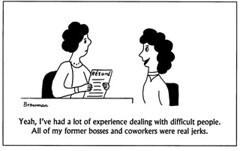
Since many of us have house guests around the holidays and want to enjoy our time with them, here is some excellent advice from Dale V. Atkins, PhD on how to get along with difficult people.
It’s inevitable that at some point we will have to spend time with people we don’t like. Maybe you don’t like your spouse’s best friend or your daughter’s boyfriend. Here are some simple guidelines for getting through these tricky situations...
YOU DON’T GET ALONG WELL WITH A RELATIVE
This is someone you can’t avoid completely but with whom you can spend only so much time before he/she starts to drive you crazy. Perhaps your sister is a slob, and you’re very tidy... or you have a parent you love, but who is overly critical.
With these people, it is best to keep activities confined to neutral zones, such as going to a movie or a restaurant. Usually, in these places, conversations don’t get too out of hand. With a movie, you’ll be able to talk only before and after, though you’re still spending time together. Also, these activities have built-in time limits, so you will be spending quality time with someone you love, but you’ll also be giving yourself an exit.
Keep in mind that while you may be tempted, it’s usually not worth your time to try to redesign someone’s personality. This almost always meets with resistance and can lead to fights. Just try to focus on the best aspects of his/her personality.
YOU DON’T LIKE YOUR PARTNER’S FRIEND
When you don’t like your partner’s friend, it can be difficult for both you and your partner. First, try your best to see things through your partner’s eyes, and try to find something you like or can appreciate about his friend. It can be something as simple as appreciating his sense of style or a joke he told once.
Let your partner know that it’s OK to do things without you, but try to attend if there’s an important event in the friend’s life -- for example, a wedding or a party for a promotion.
Never try to turn your partner against his friend. You don’t have to like him as much as your partner does, but you should respect the relationship. Don’t be rude or say nasty things about him.
YOUR PARTNER DOESN’T LIKE YOUR FRIEND
Let your partner know that it is OK to not like your friend, but it’s not OK to be rude or dismissive to him/her. Ask for the same respect to be shown to your friends that you show to your partner’s friends.
Cultivate your relationship with your friend without your partner, and don’t insist that everyone spend time together. Sometimes it’s easier to do this during the week, instead of on the weekend, when you may have family obligations.
YOU DON’T LIKE YOUR CHILD’S SPOUSE
One of the trickiest situations is when your child marries someone whom you do not like. It can be very hard to hide your feelings, but for the sake of your relationship with your child, it’s a good idea. Make every effort to get along with your child’s spouse, and do your best to care about him/her and show him respect.
Don’t say anything bad about your child’s spouse. You don’t want to put your child in the middle of a conflict between you and his spouse, and it is not fair to make your child choose between you and the spouse.
If there is a legitimate issue between you and your child’s spouse -- for example, if she is rude to you in public -- it’s best to pull her aside at another time and try to work it out.
YOU DON’T AGREE WITH A LOVED ONE’S CHOICES
It’s always hard to see someone you love making bad choices. Maybe a child is spending too much time partying at college or a friend is in a damaging relationship.
Talk to him/her in an open way, and share your concerns -- but don’t pressure and don’t be overly judgmental. Discuss with him the consequences of his actions. For example, if your child is partying at school more than studying, there is a real chance that he could flunk out.
Remember that he must choose to change -- you can’t force that on anyone. Tell him that you love him and that you always will, but that you don’t agree with his choices.
One way to reduce the stress you feel when seeing a friend or relative in situations you don’t agree with is to focus on your own wisdom and be grateful for what you have and who you are.
YOU DON’T LIKE YOUR HOUSEGUEST
Sometimes there’s no way to avoid having your castle invaded by people who get under your skin -- whether it is your partner’s old college roommate or your great-aunt Helen.
Try to carve out some time for yourself. Find something relaxing and recharging that you love to do. Take a quiet walk by yourself... have a relaxing bath... or meditate.
It may help to put your guests to work if they are staying with you for more than a few days. Having them do some dishes or fold some laundry can help to greatly reduce your own stress level. If you have less stress and less work to do, you might even enjoy your guests.
Regardless of what tools we use and how we cope we may face stress in dealing with difficult people during the holiday season. If we remember to practice self care whenever we begin to feel overwhelmed, we will be able to enjoy our family and friends and rejoice in the precious present.
Thursday, December 3, 2009
Why Can't I Clear Out The Fog?
Why is it that we can clearly see problems and solutions for others and yet when our own difficulties come into play we often remain in a fog?
We have the ability to practice a form of mental self defense where we either deny a challenge exists all together, or we rationalize away its severity. We may intellectualize our issues, not allowing ourselves to feel our emotions fully. We may do this to minimize pain and loss, or in an attempt to keep ourselves from recognizing the truth of our situation.
We may have begun learning this defense mechanism when we were children. If we lived in a family of origin where there was a great deal of chaos we may have needed this defense in order to survive. As we grow into adults we may find that our old defense mechanisms have begun to hinder our ability to fully participate in our own lives. We may be incapable of recognizing when we are being treated poorly. We may be unable to experience joy. We may be marching through life in a state of suspended emotional animation, existing, but not living.
When we begin our walk on the path of recovery we may initially find our emotions overwhelming and feel incapable of handling the waves of feelings that surge through our minds and bodies. As time progresses we become more comfortable within ourselves and feel capable of handling our strong emotions. We may recall that as children we may have had no one to guide us through the maze of our own feelings. They may have been strong and frightening, so we locked them away. Now that we are adults we can unlock those stored childhood feelings, process them in our adult minds and allow them to become a part of us.
In healthy families adults model appropriate reactions to strong emotions by regulating their responses. In dysfunctional families there may be no responsible adult present to serve as role model. The only model we see may be an emotionally frightened or enraged caretaker who is incapable of managing their own feelings and is acting out. If we grow up in an environment such as this, it is no wonder why we, as adults, may feel overwhelmed by strong emotions.
Learning to properly respond to feelings and challenges is a skill that is developed over years of observing role models and experimenting with our own abilities. If we have not developed these skills in childhood we may be emotionally immature.
We can learn the skills necessary to function in a healthy manner in all our interactions. It may take practice, learning new skills and a great deal of failure before we finally become adept at handling our strong feelings appropriately, but we can master the necessary skills with time and practice.
We have the ability to practice a form of mental self defense where we either deny a challenge exists all together, or we rationalize away its severity. We may intellectualize our issues, not allowing ourselves to feel our emotions fully. We may do this to minimize pain and loss, or in an attempt to keep ourselves from recognizing the truth of our situation.
We may have begun learning this defense mechanism when we were children. If we lived in a family of origin where there was a great deal of chaos we may have needed this defense in order to survive. As we grow into adults we may find that our old defense mechanisms have begun to hinder our ability to fully participate in our own lives. We may be incapable of recognizing when we are being treated poorly. We may be unable to experience joy. We may be marching through life in a state of suspended emotional animation, existing, but not living.
When we begin our walk on the path of recovery we may initially find our emotions overwhelming and feel incapable of handling the waves of feelings that surge through our minds and bodies. As time progresses we become more comfortable within ourselves and feel capable of handling our strong emotions. We may recall that as children we may have had no one to guide us through the maze of our own feelings. They may have been strong and frightening, so we locked them away. Now that we are adults we can unlock those stored childhood feelings, process them in our adult minds and allow them to become a part of us.
In healthy families adults model appropriate reactions to strong emotions by regulating their responses. In dysfunctional families there may be no responsible adult present to serve as role model. The only model we see may be an emotionally frightened or enraged caretaker who is incapable of managing their own feelings and is acting out. If we grow up in an environment such as this, it is no wonder why we, as adults, may feel overwhelmed by strong emotions.
Learning to properly respond to feelings and challenges is a skill that is developed over years of observing role models and experimenting with our own abilities. If we have not developed these skills in childhood we may be emotionally immature.
We can learn the skills necessary to function in a healthy manner in all our interactions. It may take practice, learning new skills and a great deal of failure before we finally become adept at handling our strong feelings appropriately, but we can master the necessary skills with time and practice.
Wednesday, November 18, 2009
Volunteering - A Path to Better Self Esteem
How can we feel better about our own life? What can we do to improve our self esteem?
In addition to the recovery work that we practice in our daily lives we have another avenue open to us for increasing our self esteem. Volunteering. When we avail ourselves of the opportunity to help others we leave our own issues and difficulties behind and focus outside ourselves for a time. We become immersed in the problems of others and in the process may gain some perspective on our own issues.
One of the most wonderful ways we can accomplish this task during the holidays is a creation of the United States Postal Service called Operation Santa Claus. The movement had its beginnings in the 1920's when postal workers took letters from the dead letter office address to Santa and chipped in some of their own funds to buy gift for needy children. Since that time the New York City postal workers at the post office located at 33rd Street and Eighth Avenue, behind Madison Square Garden, have collected the letters and set them aside for folks to read over and choose each year, beginning in December. These postal workers do this on their own time without pay each year. It is estimated that this year there may be up to 200,000 letters due to the economic down turn.
Let us each take a moment this year and choose to give a child who will receive nothing a gift. If your own economic circumstances don't permit the expense of any funds, making something creative will fill the void nicely.
I have participated in Operation Santa Claus and have found it made my holidays the most fulfilling of all. Here is a link to an article about Operation Santa Claus.
http://www.operationlettertosanta.com/Pages/story_1.htm
In addition to the recovery work that we practice in our daily lives we have another avenue open to us for increasing our self esteem. Volunteering. When we avail ourselves of the opportunity to help others we leave our own issues and difficulties behind and focus outside ourselves for a time. We become immersed in the problems of others and in the process may gain some perspective on our own issues.
One of the most wonderful ways we can accomplish this task during the holidays is a creation of the United States Postal Service called Operation Santa Claus. The movement had its beginnings in the 1920's when postal workers took letters from the dead letter office address to Santa and chipped in some of their own funds to buy gift for needy children. Since that time the New York City postal workers at the post office located at 33rd Street and Eighth Avenue, behind Madison Square Garden, have collected the letters and set them aside for folks to read over and choose each year, beginning in December. These postal workers do this on their own time without pay each year. It is estimated that this year there may be up to 200,000 letters due to the economic down turn.
Let us each take a moment this year and choose to give a child who will receive nothing a gift. If your own economic circumstances don't permit the expense of any funds, making something creative will fill the void nicely.
I have participated in Operation Santa Claus and have found it made my holidays the most fulfilling of all. Here is a link to an article about Operation Santa Claus.
http://www.operationlettertosanta.com/Pages/story_1.htm
Tuesday, November 10, 2009
Questions and Answers on Relationships
We worked through a lot of issues... Please explain... what issues have you worked through? Were they the same issues you have now? If that is so, then maybe you haven't worked through these issues.
We have no intimacy... What does intimacy mean to you? Intimacy doesn't mean sexual or physical gratification. Intimacy means allowing another person to get to know you without all the masks, roles and pretense most of us use to protect ourselves. Has your partner tried to get to know you? Have you allowed them in?
There's no passion... What is lacking here, sexual passion? Was there ever any? Is this a problem of different libidos or a problem of sexual attraction?
I'm just so worried I'm making a mistake... Maybe we are making a mistake. We have tried couples counseling for some time with little to show for it. Have we considered going to individual counseling first to sort out our own issues before we try to fix our partner? One of the first things we all learn is that if we expect our relationship to get better we have to stop trying to fix and change our partner and work on changing ourselves. Once we have worked through our own issues then we are ready to try couples work and improve our relationship. The cart before the horse rarely produces results.
I'm so bitter from the lack of love being shown me and the way I'm made to feel, like I have to beg for love... Once we become embittered and lose our ability to be compassionate toward our partner we are doing to them exactly what we feel they are doing to us. It becomes a self fulfilling cycle of victimization and punishment. We move from being the victim (such a comfy role) to being the punisher (the angry role) and build walls keeping each other out.
Nothing changes and I'm tired of hoping it will - when it seems apparent it won't... even if we could make each other happy it seems it would be both of us somehow being something were not, it would always be fake...This is the saddest comment of all... anticipating that even if our partner does change, we would still be unhappy because it wouldn't be spontaneous. The best relationships are those where both partners make a conscious decision to do the work necessary to make intimacy and passion happen. They often don't happen on their own when partners are tuckered out from working so hard and helping around the house. Partners may begin to get lazy. Instead of trying to make things better with action and effort they may resort to the lazy way of fixing things... complaining... pointing fingers... blaming... It is much harder to do the work of making the effort than it is to blame our partner. Sadly when our partner makes an effort, often we are so angry and bitter that we don't give our partner the appreciation they need to feed that effort. So, after a couple of weeks of trying and not really getting the feedback they need... they give up. No relationship stays static. It is always changing, hopefully growing, and always needs maintenance and care or it dies. How would you feel if you failed and your partner didn't give you another chance to make it right?
I love my partner, but I cant take the pain... Love isn't a feeling. Love is an action verb... it is a word that indicates a willingness to put the person we love before ourselves. Love is patient, kind, gentle, appreciative, humble, giving... when we love we allow them to fail and try again.
We have no intimacy... What does intimacy mean to you? Intimacy doesn't mean sexual or physical gratification. Intimacy means allowing another person to get to know you without all the masks, roles and pretense most of us use to protect ourselves. Has your partner tried to get to know you? Have you allowed them in?
There's no passion... What is lacking here, sexual passion? Was there ever any? Is this a problem of different libidos or a problem of sexual attraction?
I'm just so worried I'm making a mistake... Maybe we are making a mistake. We have tried couples counseling for some time with little to show for it. Have we considered going to individual counseling first to sort out our own issues before we try to fix our partner? One of the first things we all learn is that if we expect our relationship to get better we have to stop trying to fix and change our partner and work on changing ourselves. Once we have worked through our own issues then we are ready to try couples work and improve our relationship. The cart before the horse rarely produces results.
I'm so bitter from the lack of love being shown me and the way I'm made to feel, like I have to beg for love... Once we become embittered and lose our ability to be compassionate toward our partner we are doing to them exactly what we feel they are doing to us. It becomes a self fulfilling cycle of victimization and punishment. We move from being the victim (such a comfy role) to being the punisher (the angry role) and build walls keeping each other out.
Nothing changes and I'm tired of hoping it will - when it seems apparent it won't... even if we could make each other happy it seems it would be both of us somehow being something were not, it would always be fake...This is the saddest comment of all... anticipating that even if our partner does change, we would still be unhappy because it wouldn't be spontaneous. The best relationships are those where both partners make a conscious decision to do the work necessary to make intimacy and passion happen. They often don't happen on their own when partners are tuckered out from working so hard and helping around the house. Partners may begin to get lazy. Instead of trying to make things better with action and effort they may resort to the lazy way of fixing things... complaining... pointing fingers... blaming... It is much harder to do the work of making the effort than it is to blame our partner. Sadly when our partner makes an effort, often we are so angry and bitter that we don't give our partner the appreciation they need to feed that effort. So, after a couple of weeks of trying and not really getting the feedback they need... they give up. No relationship stays static. It is always changing, hopefully growing, and always needs maintenance and care or it dies. How would you feel if you failed and your partner didn't give you another chance to make it right?
I love my partner, but I cant take the pain... Love isn't a feeling. Love is an action verb... it is a word that indicates a willingness to put the person we love before ourselves. Love is patient, kind, gentle, appreciative, humble, giving... when we love we allow them to fail and try again.
Tuesday, November 3, 2009
Am I Practicing Self Care or Being Selfish?
Can self care become selfishness? How do we keep ourselves in balance?
Self care is an important part of our recovery effort. We learn to care for ourselves. We set effective boundaries, avoid the drama of others, stay balanced and keep ourselves from becoming overwhelmed in the face of lifes challenges. We practice discernment, use our tools to cope effectively, and in the process increase our self esteem.
As we begin to practice self care and learn to set effective boundaries we change. That change brings discomfort to our partner. We are no longer willing to do things that our partner can and should do for themselves. As a result, we begin to receive change back messages from our partner. This is their response to the stress our changes bring into their life. We exercise patience, showing our partner our committment to our recovery and allowing them the time to catch up. We use discernment to detect when we are being drawn into the drama of others, keeping ourselves in balance. When we find ourselves feeling overwhelmed as a result of the strength of our emotions, we use our tools to bring ourselves back into balance, recognizing that we cannot effectively help our partner to cope when we ourselves are overwhelmed.
As long as our self care is focused on achieving balance for the purpose of being able to be emotionally present in our relationship with our partner, as well as for our overall health, we will be practicing self care and not selfishness. When we allow our defense mechanisms and fear to control us, we lose sight of healthy boundaries and begin to focus too much on ourselves and our issues. When that happens too often, we may fail to be emotionally present for our partner and our relationship. We cannot be centered at all times, but we can strive for balance in a consistent manner.
During our growth and change our partner may feel unsure of our relationship. We take the initiative, reaffirming our love and devotion to both our partner and our relationship, allowing our partner to take these new patterns of interacting in stride. We recall that change creates discomfort and unease and give our partner plenty of time and the space necessary to adapt.
As we walk our path of recovery we find that we take three steps forward and two back testing our resolve and misstepping frequently. We will learn slowly, carefully, in our own time, how to maintain balance without seeming insensitive or too self involved. Recovery may not be easy, but we find that the rewards are well worth the effort as we feel our self esteem grow stronger day by day.
Self care is an important part of our recovery effort. We learn to care for ourselves. We set effective boundaries, avoid the drama of others, stay balanced and keep ourselves from becoming overwhelmed in the face of lifes challenges. We practice discernment, use our tools to cope effectively, and in the process increase our self esteem.
As we begin to practice self care and learn to set effective boundaries we change. That change brings discomfort to our partner. We are no longer willing to do things that our partner can and should do for themselves. As a result, we begin to receive change back messages from our partner. This is their response to the stress our changes bring into their life. We exercise patience, showing our partner our committment to our recovery and allowing them the time to catch up. We use discernment to detect when we are being drawn into the drama of others, keeping ourselves in balance. When we find ourselves feeling overwhelmed as a result of the strength of our emotions, we use our tools to bring ourselves back into balance, recognizing that we cannot effectively help our partner to cope when we ourselves are overwhelmed.
As long as our self care is focused on achieving balance for the purpose of being able to be emotionally present in our relationship with our partner, as well as for our overall health, we will be practicing self care and not selfishness. When we allow our defense mechanisms and fear to control us, we lose sight of healthy boundaries and begin to focus too much on ourselves and our issues. When that happens too often, we may fail to be emotionally present for our partner and our relationship. We cannot be centered at all times, but we can strive for balance in a consistent manner.
During our growth and change our partner may feel unsure of our relationship. We take the initiative, reaffirming our love and devotion to both our partner and our relationship, allowing our partner to take these new patterns of interacting in stride. We recall that change creates discomfort and unease and give our partner plenty of time and the space necessary to adapt.
As we walk our path of recovery we find that we take three steps forward and two back testing our resolve and misstepping frequently. We will learn slowly, carefully, in our own time, how to maintain balance without seeming insensitive or too self involved. Recovery may not be easy, but we find that the rewards are well worth the effort as we feel our self esteem grow stronger day by day.
Tuesday, October 27, 2009
Why is Gratefulness Necessary?
Gratefulness... what value does it have? Why is it necessary? How does it contribute to our recovery and healing?
When we work through our issues during the recovery process we come to understand why we made the choices we did. We open our eyes and see ourselves in truth. We strip away all the confusion and dithering and come to grips with what has transpired in our lives. We make no excuses for our situation and understand that we own our own power and can guide our lives along the path that has been laid before us.
We move through recovery advancing through the process one step at a time. We begin in denial and blame... afraid to acknowledge the truth of our situation. We work through those feelings until we come to a place where we can no longer define our situation in terms of wishful thinking. At this point we become angry as a result of all the pain and loss we have suffered due to our pasts and the choices we have made. As we work through our anger we come to a stage where we try to bargain our way out of the facing our feelings. When we finally are tired of trying to avoid our emotions we succumb to the truth. It is a time of extreme sadness and depression. We are overwhelmed with emotion and feel the full weight of our pain and loss. We grieve in earnest. In time we move through the pain to a place of acceptance. We understand that we cannot change what has happened and we accept that these events are a permanent part of our lives.
This process of recovery takes us through emotional upheaval. At the close of the process we are faced with the truth and our feelings as a regards our situation. There is yet one more step we must face in order to heal the wounds we suffered. We must learn to be grateful for our past and the choices we made in order to be freed from the emotional pain they carry.
This is the hardest step of all. How do we become grateful for the caretaker that abused us? How to we become grateful for the parent who incested us? How to we become grateful for the partner who abandoned us?
We become grateful through compassion. We begin to understand that we would not be who we are today without the lessons those events brought into our lives. We may not be able to be grateful for the events themselves, but we can be grateful for the growth and changes we experienced as a result of those events.
The child who grew up with an abusive caretaker becomes an especially capable parent. The adolescent who was incested becomes a counselor for those who have suffered that same crime and is more adept than others because of the empathy felt. The abandoned partner learns to be independent and develop their individuality, becoming their best self as a result.
While we are grieving we cannot even fathom ever feeling gratefulness toward the incidents that caused us such pain and loss. As we come through recovery and move toward our healthier self we learn that this last step is the one that places us on the road to emotional freedom.
When we work through our issues during the recovery process we come to understand why we made the choices we did. We open our eyes and see ourselves in truth. We strip away all the confusion and dithering and come to grips with what has transpired in our lives. We make no excuses for our situation and understand that we own our own power and can guide our lives along the path that has been laid before us.
We move through recovery advancing through the process one step at a time. We begin in denial and blame... afraid to acknowledge the truth of our situation. We work through those feelings until we come to a place where we can no longer define our situation in terms of wishful thinking. At this point we become angry as a result of all the pain and loss we have suffered due to our pasts and the choices we have made. As we work through our anger we come to a stage where we try to bargain our way out of the facing our feelings. When we finally are tired of trying to avoid our emotions we succumb to the truth. It is a time of extreme sadness and depression. We are overwhelmed with emotion and feel the full weight of our pain and loss. We grieve in earnest. In time we move through the pain to a place of acceptance. We understand that we cannot change what has happened and we accept that these events are a permanent part of our lives.
This process of recovery takes us through emotional upheaval. At the close of the process we are faced with the truth and our feelings as a regards our situation. There is yet one more step we must face in order to heal the wounds we suffered. We must learn to be grateful for our past and the choices we made in order to be freed from the emotional pain they carry.
This is the hardest step of all. How do we become grateful for the caretaker that abused us? How to we become grateful for the parent who incested us? How to we become grateful for the partner who abandoned us?
We become grateful through compassion. We begin to understand that we would not be who we are today without the lessons those events brought into our lives. We may not be able to be grateful for the events themselves, but we can be grateful for the growth and changes we experienced as a result of those events.
The child who grew up with an abusive caretaker becomes an especially capable parent. The adolescent who was incested becomes a counselor for those who have suffered that same crime and is more adept than others because of the empathy felt. The abandoned partner learns to be independent and develop their individuality, becoming their best self as a result.
While we are grieving we cannot even fathom ever feeling gratefulness toward the incidents that caused us such pain and loss. As we come through recovery and move toward our healthier self we learn that this last step is the one that places us on the road to emotional freedom.
Friday, October 23, 2009
Know Thyself... and be less angry!!
Why do we feel infuriated when we disagree with our partner over important issues in our relationship? When we disagree, why do we instinctively feel that we are right?
When events spiral out of control in our relationship we may become angry. We may feel as though our partner is on the attack. There is frustration and disagreement between ourselves and our partner. We may feel as though our partner is being unfair and unreasonable. Our defenses are primed. We may become unable to keep ourselves in a logical frame of mind. We may succumb to the temptation of playing the blame game.
All these defensive postures are designed to keep us from recognizing what is at the core of our anger. We are feeling vulnerable. We may not be certain that our partner is incorrect. On some level we may doubt the veracity of our position. We may feel that our partner has made their point well and we are too invested in our own position to admit that another possibility exists.
All these possibilities run through our head as we argue and debate our point with our partner. We both feel strongly. We each defend our positions well. We cannot sway the other to our side. At the close of our disagreement we may feel angry. We are entrenched in our position and blame our partner for their inability to see our point of view. But... the same could be said of us. We are at an impasse.
If we are able to put our ego aside, allow ourselves to eliminate blame from the equation we might be able to see our situation in a calmer more centered way. If we were able to view the facts in a dispassionate manner we might be able to avoid the confrontation. Both of those statements sound nice... but we are emotional, feeling, human beings. We can no more put aside our feelings and respond in a dispassionate manner than we can decide not to breathe any longer.
The answer is to recognize what is going on within ourselves... to acknowledge our own vulnerabilities and limitations. To know ourselves well enough to be able to be honest in our self appraisal. If we can accomplish this task we are in a much better position to be rational and compassionate during disagreements.
When events spiral out of control in our relationship we may become angry. We may feel as though our partner is on the attack. There is frustration and disagreement between ourselves and our partner. We may feel as though our partner is being unfair and unreasonable. Our defenses are primed. We may become unable to keep ourselves in a logical frame of mind. We may succumb to the temptation of playing the blame game.
All these defensive postures are designed to keep us from recognizing what is at the core of our anger. We are feeling vulnerable. We may not be certain that our partner is incorrect. On some level we may doubt the veracity of our position. We may feel that our partner has made their point well and we are too invested in our own position to admit that another possibility exists.
All these possibilities run through our head as we argue and debate our point with our partner. We both feel strongly. We each defend our positions well. We cannot sway the other to our side. At the close of our disagreement we may feel angry. We are entrenched in our position and blame our partner for their inability to see our point of view. But... the same could be said of us. We are at an impasse.
If we are able to put our ego aside, allow ourselves to eliminate blame from the equation we might be able to see our situation in a calmer more centered way. If we were able to view the facts in a dispassionate manner we might be able to avoid the confrontation. Both of those statements sound nice... but we are emotional, feeling, human beings. We can no more put aside our feelings and respond in a dispassionate manner than we can decide not to breathe any longer.
The answer is to recognize what is going on within ourselves... to acknowledge our own vulnerabilities and limitations. To know ourselves well enough to be able to be honest in our self appraisal. If we can accomplish this task we are in a much better position to be rational and compassionate during disagreements.
Tuesday, October 20, 2009
The Truth or A Lie? A Quandary!
What would happen if we never told any lies at all, if we answered every question with complete honesty? Would we be able to maintain our relationships?
Our partner asks us if their clothes look attractive... we look and see that the colors they have chosen make their skin look drab and dull. We stop and think... do we tell them the truth? Or do we say something nice so they feel good. We value honesty... but we also value compassion... we have a decision to make. If we tell the truth our partner has the opportunity to change their clothes and look better. We might hurt our partners feelings in the process. If we don't tell the truth we tell a lie and break our promise of honesty. A real quandary exists. What is more important... truth or compassion?
Our boss asks us if we have time available to complete a special project that will earn us the chance for a promotion in our firm. We are up to our eyeballs in alligators and don't even have time for the work load we already have on our desk. Do we tell the truth and turn down the opportunity for possible advancement? Or do we tell a lie and take on the additional work knowing we will have to work nights and weekends without pay to make up the time? Which is more important... truth or advancement?
In each of these situations we have decisions to make regarding events that occur in everyday life. We are often asked for our input by our partner in decisions that may affect their self esteem. In many instances we opt for compassion over truth. We do this because we are interested in enhancing our partner's self worth. We may decide that telling the truth would offer no gain in the relationship, whereas giving a compassionate answer may keep their self esteem intact over an unimportant issue.
When we are asked by our boss to take on additional responsibility we realize that we are being offered an opportunity to show leadership and the capability to handle a more complex workload. Since we are interested in promotions we take on the challenge even though it involves telling our boss a lie. We understand that we must invest the hours to make the decision work to our benefit. We choose the route to advancement over telling the truth.
In both of these instances we may have opted to tell a lie rather than the truth. We have weighed the value of honesty against compassion in one instance and against the chance for promotion in the other. Is it impossible to be completely honest in our day to day lives? Can we maintain our integrity and be compassionate at the same time?
As we learn the art of interacting with others during our formative years we begin a process we will continue over our lifetime of weighing and balancing truth with the need to be compassionate toward others. As we enter the business world and begin our career we learn that honesty must be weighed against our desire for advancement.
Although we long to live by our virtue of integrity, we learn that basic human interactions are complex and cannot survive well in a world built solely on truth. Compassion may require us not disclose certain facts. The need for advancement may overshadow our need to be completely honest. As long as we continue to weigh each decision individually with compassion and the ultimate desire to be as honest as possible we will continue to display compassion and dedication in our daily lives.
There is, of course, inherent danger in telling any lies, no matter how small or insignificant we may think they are at the time. We must never confuse blind ambition with dedication. We must never confuse selfish needs over compassion. So long as we are able to keep our perspective and be mindful of our responsibility to ourselves and others we will remain healthy and balanced in all our relationships.
Our partner asks us if their clothes look attractive... we look and see that the colors they have chosen make their skin look drab and dull. We stop and think... do we tell them the truth? Or do we say something nice so they feel good. We value honesty... but we also value compassion... we have a decision to make. If we tell the truth our partner has the opportunity to change their clothes and look better. We might hurt our partners feelings in the process. If we don't tell the truth we tell a lie and break our promise of honesty. A real quandary exists. What is more important... truth or compassion?
Our boss asks us if we have time available to complete a special project that will earn us the chance for a promotion in our firm. We are up to our eyeballs in alligators and don't even have time for the work load we already have on our desk. Do we tell the truth and turn down the opportunity for possible advancement? Or do we tell a lie and take on the additional work knowing we will have to work nights and weekends without pay to make up the time? Which is more important... truth or advancement?
In each of these situations we have decisions to make regarding events that occur in everyday life. We are often asked for our input by our partner in decisions that may affect their self esteem. In many instances we opt for compassion over truth. We do this because we are interested in enhancing our partner's self worth. We may decide that telling the truth would offer no gain in the relationship, whereas giving a compassionate answer may keep their self esteem intact over an unimportant issue.
When we are asked by our boss to take on additional responsibility we realize that we are being offered an opportunity to show leadership and the capability to handle a more complex workload. Since we are interested in promotions we take on the challenge even though it involves telling our boss a lie. We understand that we must invest the hours to make the decision work to our benefit. We choose the route to advancement over telling the truth.
In both of these instances we may have opted to tell a lie rather than the truth. We have weighed the value of honesty against compassion in one instance and against the chance for promotion in the other. Is it impossible to be completely honest in our day to day lives? Can we maintain our integrity and be compassionate at the same time?
As we learn the art of interacting with others during our formative years we begin a process we will continue over our lifetime of weighing and balancing truth with the need to be compassionate toward others. As we enter the business world and begin our career we learn that honesty must be weighed against our desire for advancement.
Although we long to live by our virtue of integrity, we learn that basic human interactions are complex and cannot survive well in a world built solely on truth. Compassion may require us not disclose certain facts. The need for advancement may overshadow our need to be completely honest. As long as we continue to weigh each decision individually with compassion and the ultimate desire to be as honest as possible we will continue to display compassion and dedication in our daily lives.
There is, of course, inherent danger in telling any lies, no matter how small or insignificant we may think they are at the time. We must never confuse blind ambition with dedication. We must never confuse selfish needs over compassion. So long as we are able to keep our perspective and be mindful of our responsibility to ourselves and others we will remain healthy and balanced in all our relationships.
Tuesday, October 13, 2009
Relationships in Step Families
Wednesday Martin, Ph.D, author of the book, Stepmonster, has some truths to share with us about the possibilities that may occur in step families when relationships begin to deteriorate over time and those involved are not in recovery. Here is her perspective.
One of the ugliest truths of stepfamily reality, I learned as I researched my book Stepmonster, is competition. Namely, competition between the woman with stepkids and her husband's kids for the husband/father's time, attention, and assets. In spite of our culture's insistence that divorced and remarried men with kids can jerry rig a life where "both his kids and his wife come first," and regardless of our notion that women should just "put his kids first because it's right," we live in the real world. And in that real world, the longitudinal studies by Bray, Ahrons, and Hetherington tell us, kids of all ages often find themselves in loyalty binds, leading them to treat their stepmothers in unkind ways. Other kids who have been parented permissively post- divorce (a common phenomenon) may act out well into adulthood, blaming their stepmothers for their parent's divorce even when it isn't the case, and failing to treat their father, his marriage and his wife with respect. Divorced fathers, for their part, too often refuse to require civil behavior from their kids toward stepmom, out of guilt that the kids went through a divorce, and fear that if they draw the line, the kids will walk away forever. And finally, more than a few stepmothers who want very badly to get stepmothering right will find themselves depleted from years of rebuffs; they may retreat in disappointment or frustration, in an effort to protect themselves and preserve their dignity. Steprelations, the experts cited above tell us, are virtually never effortless, and they are frequently difficult.
With that sobering thought in mind let us look carefully at our recovery process making sure that we are practicing self care and using our tools in our daily lives. This graphic illustration of what can happen when people attempt to brush issues aside, or pretend that problems don't exist brings home the tragic reality that when the truth is ignored both adults and children suffer needlessly. If those in these relationships were practicing self care and moving forward in their recovery journey their outcomes would all be more positive in the long run. This is not to say that real issues do not surface regardless, but dealing with them as they arise in an effective manner reduces their long term impact and promotes more positive interactions.
We are all responsible for the quality of our relationships and the effort we put forth to make those special ties work as well as possible. As we move forward in our recovery we add value to all our partnerships and those we care most about in our lives.
One of the ugliest truths of stepfamily reality, I learned as I researched my book Stepmonster, is competition. Namely, competition between the woman with stepkids and her husband's kids for the husband/father's time, attention, and assets. In spite of our culture's insistence that divorced and remarried men with kids can jerry rig a life where "both his kids and his wife come first," and regardless of our notion that women should just "put his kids first because it's right," we live in the real world. And in that real world, the longitudinal studies by Bray, Ahrons, and Hetherington tell us, kids of all ages often find themselves in loyalty binds, leading them to treat their stepmothers in unkind ways. Other kids who have been parented permissively post- divorce (a common phenomenon) may act out well into adulthood, blaming their stepmothers for their parent's divorce even when it isn't the case, and failing to treat their father, his marriage and his wife with respect. Divorced fathers, for their part, too often refuse to require civil behavior from their kids toward stepmom, out of guilt that the kids went through a divorce, and fear that if they draw the line, the kids will walk away forever. And finally, more than a few stepmothers who want very badly to get stepmothering right will find themselves depleted from years of rebuffs; they may retreat in disappointment or frustration, in an effort to protect themselves and preserve their dignity. Steprelations, the experts cited above tell us, are virtually never effortless, and they are frequently difficult.
With that sobering thought in mind let us look carefully at our recovery process making sure that we are practicing self care and using our tools in our daily lives. This graphic illustration of what can happen when people attempt to brush issues aside, or pretend that problems don't exist brings home the tragic reality that when the truth is ignored both adults and children suffer needlessly. If those in these relationships were practicing self care and moving forward in their recovery journey their outcomes would all be more positive in the long run. This is not to say that real issues do not surface regardless, but dealing with them as they arise in an effective manner reduces their long term impact and promotes more positive interactions.
We are all responsible for the quality of our relationships and the effort we put forth to make those special ties work as well as possible. As we move forward in our recovery we add value to all our partnerships and those we care most about in our lives.
Friday, October 9, 2009
Where's Your National Pride?
Today was a milestone. Our President, Barack Obama, was awarded the Noble Peace Prize for his teams work in their efforts to reshape the global attitude toward stopping terrorism and striving for a nuclear free world. It was the first time in many years that I was able to be proud, once again, to be an American.
Please don't misunderstand, I have always been proud of my citizenship of our country, but these last years have been quite embarrassing for America in several areas. We have tortured prisioners against the Geneva Convention, of which we are signers. We have invaded another country without proper cause, and in the process lost sight of our real goal in the mid east. We have increased the income of the top 1% earners in our country at the expense of the poor and middle class. We have gone from a budget surplus to a multi trillion dollar deficit. We have become the worlds largest international debtor. We have allowed in exess of 44 million of our countrymen to be without health insurance, directly contributing over 40,000 of them dieing each year.
It is horrifying, to say the least, to see what has happened in our country. The place that was supposed to be one of the best places on earth... where people could live decent respectable lives without having to work themselves to death... "...life, liberty and the pursuit of happiness..."
What happened? How did we go from that ideal to being slaves to giant, multi-national corporations? Theives that run our banks... that are now "too big to fail" taking huge bonuses with the public's money? Investment institutions that make up new types of gambling style investments that rape those who get sucked into buying them? While being regulated by no one?
Finally, the public being enslaven by the health care industry... specifically the insurance cartel... the one that charges a fortune, pays it's executives in the neighborhood of $57,000 an hour and denies coverge for whatever they deem a pre-existing condition or an unnecessary procedure? Who made up these rules and put them into a health insurance policy? What happened to those who regulate the insurance industry? Were they asleep at the switch?
Isn't the purpose of heath insurance to insure that we can affort to get health care... especially when we need it the most... when we are sick? How is anyone supposed to heal when they are worrying about how to pay the bills that are sure to arrive even when they have health insurance? Or worse yet... can't see a doctor because they don't have health insurance and can't afford to buy it!
What happened to our country? How did we end up with radio and television talk show hosts making policy in Washington by exaggerating, spewing lies and filling up the airwaves with garbage in a 24 hour news cycle? These people are interested in one thing... ratings... why? because ratings effectively line their pockets... they say so themselves!!
How did we end up with a Congress that doesn't have term limits? Who can take campaign funds from whomever they please, vote however they please... oftentimes not in line with their constituents, but with their donors... and still get re-elected. How did we end up with politicians who are totally out of touch with the American public, who rely on skewed polls instead of finding out by asking the people they were elected to represent... the American people... what they want.
It is too easy to yell and scream at phoney Town Hall meetings. It's too easy to sit on the sidelines and pass judgement about what others may or may not think and feel. It is too easy to do nothing except talk about one's opinion... as though talking about it has any effect... it doesn't. We can all argue and talk until we are blue in the face, but if we don't get up off our couches and DO something, nothing will change.
There are things we can do. We can pick up the phone and call our Congressional Representatives and Senators. We can write a letter or send an email to those same folks letting them know what we want and how we feel about the issues upon which they will vote, and about what we think of them taking campaign funds from lobbyists who are lobbying against our best interests... the American people.
We can all band together and ask for a national referendum imposing term limits on Congress. We desperately need to break the pattern of insulated out of touch behavior in Washington. Two terms is enough. Congress will never vote themselves term limits... they won't vote themselves out of a job. Congress would be much healthier if they only served a maximum of two terms... like so many other elected officials we would get a chance for change. The effectiveness of lobbying would be lessened to a degree that might make governing the actual priority of our Senators and Congressional Representatives. Wouldn't that be change we can believe in?
Let us take action. There are issues before Congress this year that will impact our lives for generations to come... health care... environmental protection... the war in Afghanistan and Iraq... ending Don't Ask Don't Tell... balancing the budget and ending our dependence on foreign investment... investing in renewable energy... breaking the barriers between politics and governing...
We have a job to do. We each count. We each need to act to make a difference. It is never too late to become part of our country and make our voices heard. The time for allowing the media to set the standards in Washington is over. Nature abhors a vacuum. Let us not leave a vacuum. Let our voices be heard, whether we agree or not is unimportant, just as long as we speak our minds... we are all vital. We are all guaranteed free speech by the Bill of Rights. Let us exercise our right to be heard!!
Please don't misunderstand, I have always been proud of my citizenship of our country, but these last years have been quite embarrassing for America in several areas. We have tortured prisioners against the Geneva Convention, of which we are signers. We have invaded another country without proper cause, and in the process lost sight of our real goal in the mid east. We have increased the income of the top 1% earners in our country at the expense of the poor and middle class. We have gone from a budget surplus to a multi trillion dollar deficit. We have become the worlds largest international debtor. We have allowed in exess of 44 million of our countrymen to be without health insurance, directly contributing over 40,000 of them dieing each year.
It is horrifying, to say the least, to see what has happened in our country. The place that was supposed to be one of the best places on earth... where people could live decent respectable lives without having to work themselves to death... "...life, liberty and the pursuit of happiness..."
What happened? How did we go from that ideal to being slaves to giant, multi-national corporations? Theives that run our banks... that are now "too big to fail" taking huge bonuses with the public's money? Investment institutions that make up new types of gambling style investments that rape those who get sucked into buying them? While being regulated by no one?
Finally, the public being enslaven by the health care industry... specifically the insurance cartel... the one that charges a fortune, pays it's executives in the neighborhood of $57,000 an hour and denies coverge for whatever they deem a pre-existing condition or an unnecessary procedure? Who made up these rules and put them into a health insurance policy? What happened to those who regulate the insurance industry? Were they asleep at the switch?
Isn't the purpose of heath insurance to insure that we can affort to get health care... especially when we need it the most... when we are sick? How is anyone supposed to heal when they are worrying about how to pay the bills that are sure to arrive even when they have health insurance? Or worse yet... can't see a doctor because they don't have health insurance and can't afford to buy it!
What happened to our country? How did we end up with radio and television talk show hosts making policy in Washington by exaggerating, spewing lies and filling up the airwaves with garbage in a 24 hour news cycle? These people are interested in one thing... ratings... why? because ratings effectively line their pockets... they say so themselves!!
How did we end up with a Congress that doesn't have term limits? Who can take campaign funds from whomever they please, vote however they please... oftentimes not in line with their constituents, but with their donors... and still get re-elected. How did we end up with politicians who are totally out of touch with the American public, who rely on skewed polls instead of finding out by asking the people they were elected to represent... the American people... what they want.
It is too easy to yell and scream at phoney Town Hall meetings. It's too easy to sit on the sidelines and pass judgement about what others may or may not think and feel. It is too easy to do nothing except talk about one's opinion... as though talking about it has any effect... it doesn't. We can all argue and talk until we are blue in the face, but if we don't get up off our couches and DO something, nothing will change.
There are things we can do. We can pick up the phone and call our Congressional Representatives and Senators. We can write a letter or send an email to those same folks letting them know what we want and how we feel about the issues upon which they will vote, and about what we think of them taking campaign funds from lobbyists who are lobbying against our best interests... the American people.
We can all band together and ask for a national referendum imposing term limits on Congress. We desperately need to break the pattern of insulated out of touch behavior in Washington. Two terms is enough. Congress will never vote themselves term limits... they won't vote themselves out of a job. Congress would be much healthier if they only served a maximum of two terms... like so many other elected officials we would get a chance for change. The effectiveness of lobbying would be lessened to a degree that might make governing the actual priority of our Senators and Congressional Representatives. Wouldn't that be change we can believe in?
Let us take action. There are issues before Congress this year that will impact our lives for generations to come... health care... environmental protection... the war in Afghanistan and Iraq... ending Don't Ask Don't Tell... balancing the budget and ending our dependence on foreign investment... investing in renewable energy... breaking the barriers between politics and governing...
We have a job to do. We each count. We each need to act to make a difference. It is never too late to become part of our country and make our voices heard. The time for allowing the media to set the standards in Washington is over. Nature abhors a vacuum. Let us not leave a vacuum. Let our voices be heard, whether we agree or not is unimportant, just as long as we speak our minds... we are all vital. We are all guaranteed free speech by the Bill of Rights. Let us exercise our right to be heard!!
Subscribe to:
Posts (Atom)









 Posts
Posts

