Betrayal is complex. Although it appears simple and straight forward it is not. Betrayal comes in many forms... adultery is one, domestic violence is another, so is spousal abuse.
There are a number of reasons why people betray. The most profound is that before we can betray our partner, we must first betray ourselves. As partners we generally agree on basic human values. We have made certain agreements about how we will behave in the relationship.
When we make the decision to betray we first decide not to honor our own internal values. We intellectualize our emotions and turn off our feelings. If we permitted ourselves to feel, we would be overwhelmed with saddness and disappointment in our own behavior, so we choose to feel nothing.
Once we have become numb it is impossible to feel the pain and loss that we are creating by our betrayal. We are living in our heads, not in our hearts. After the initial numb phase has passed and the reality of our situation has begun to sink in, we may begin to defrost. This is a very dangerous time for us. We may face an overwhelming backlog of feelings that have been stifled during our numb stage. As we process these feelings we may swing from grief and regret over the losses we caused to anger and blame over the consequences of our actions.
Through it all we may find that we are no happier with our new life than our old one. We have not dealt with our issues, only substituted one set of problems for another. The common denominator being the same... us.
Showing posts with label consequences. Show all posts
Showing posts with label consequences. Show all posts
Monday, December 7, 2009


Saturday, December 5, 2009
How Can I Get Along With Difficult People?
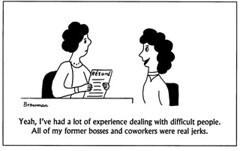
Since many of us have house guests around the holidays and want to enjoy our time with them, here is some excellent advice from Dale V. Atkins, PhD on how to get along with difficult people.
It’s inevitable that at some point we will have to spend time with people we don’t like. Maybe you don’t like your spouse’s best friend or your daughter’s boyfriend. Here are some simple guidelines for getting through these tricky situations...
YOU DON’T GET ALONG WELL WITH A RELATIVE
This is someone you can’t avoid completely but with whom you can spend only so much time before he/she starts to drive you crazy. Perhaps your sister is a slob, and you’re very tidy... or you have a parent you love, but who is overly critical.
With these people, it is best to keep activities confined to neutral zones, such as going to a movie or a restaurant. Usually, in these places, conversations don’t get too out of hand. With a movie, you’ll be able to talk only before and after, though you’re still spending time together. Also, these activities have built-in time limits, so you will be spending quality time with someone you love, but you’ll also be giving yourself an exit.
Keep in mind that while you may be tempted, it’s usually not worth your time to try to redesign someone’s personality. This almost always meets with resistance and can lead to fights. Just try to focus on the best aspects of his/her personality.
YOU DON’T LIKE YOUR PARTNER’S FRIEND
When you don’t like your partner’s friend, it can be difficult for both you and your partner. First, try your best to see things through your partner’s eyes, and try to find something you like or can appreciate about his friend. It can be something as simple as appreciating his sense of style or a joke he told once.
Let your partner know that it’s OK to do things without you, but try to attend if there’s an important event in the friend’s life -- for example, a wedding or a party for a promotion.
Never try to turn your partner against his friend. You don’t have to like him as much as your partner does, but you should respect the relationship. Don’t be rude or say nasty things about him.
YOUR PARTNER DOESN’T LIKE YOUR FRIEND
Let your partner know that it is OK to not like your friend, but it’s not OK to be rude or dismissive to him/her. Ask for the same respect to be shown to your friends that you show to your partner’s friends.
Cultivate your relationship with your friend without your partner, and don’t insist that everyone spend time together. Sometimes it’s easier to do this during the week, instead of on the weekend, when you may have family obligations.
YOU DON’T LIKE YOUR CHILD’S SPOUSE
One of the trickiest situations is when your child marries someone whom you do not like. It can be very hard to hide your feelings, but for the sake of your relationship with your child, it’s a good idea. Make every effort to get along with your child’s spouse, and do your best to care about him/her and show him respect.
Don’t say anything bad about your child’s spouse. You don’t want to put your child in the middle of a conflict between you and his spouse, and it is not fair to make your child choose between you and the spouse.
If there is a legitimate issue between you and your child’s spouse -- for example, if she is rude to you in public -- it’s best to pull her aside at another time and try to work it out.
YOU DON’T AGREE WITH A LOVED ONE’S CHOICES
It’s always hard to see someone you love making bad choices. Maybe a child is spending too much time partying at college or a friend is in a damaging relationship.
Talk to him/her in an open way, and share your concerns -- but don’t pressure and don’t be overly judgmental. Discuss with him the consequences of his actions. For example, if your child is partying at school more than studying, there is a real chance that he could flunk out.
Remember that he must choose to change -- you can’t force that on anyone. Tell him that you love him and that you always will, but that you don’t agree with his choices.
One way to reduce the stress you feel when seeing a friend or relative in situations you don’t agree with is to focus on your own wisdom and be grateful for what you have and who you are.
YOU DON’T LIKE YOUR HOUSEGUEST
Sometimes there’s no way to avoid having your castle invaded by people who get under your skin -- whether it is your partner’s old college roommate or your great-aunt Helen.
Try to carve out some time for yourself. Find something relaxing and recharging that you love to do. Take a quiet walk by yourself... have a relaxing bath... or meditate.
It may help to put your guests to work if they are staying with you for more than a few days. Having them do some dishes or fold some laundry can help to greatly reduce your own stress level. If you have less stress and less work to do, you might even enjoy your guests.
Regardless of what tools we use and how we cope we may face stress in dealing with difficult people during the holiday season. If we remember to practice self care whenever we begin to feel overwhelmed, we will be able to enjoy our family and friends and rejoice in the precious present.
Monday, November 9, 2009
Can I Learn to Let Go & Forgive?
What does it mean to let go? Why is it important? What does it have to do with forgiveness?
Letting go doesn't mean letting things go. Letting go means not trying to control other people or outcomes in situations. It means letting the universe unfold naturally. When we try to control anything we cannot, that thing ends up controlling us. Letting go means... Let go and let God. It means we stop trying to do our Higher Power's job and let our Higher Power handle it.
Forgiveness doesn't mean that we believe that our partners unkind actions are acceptable. Forgiveness means that we have let go of the anger, the need for revenge, the need to punish and allowed ourselves to get out of the way so that the our partner can experience the natural consequences of their actions... without our interference. Consequences happen in their own time... not in ours... so patience is a part of the process as well.
Forgiveness is a part of letting go. When we forgive we decide we are no longer going to allow the actions of our partner to continue to control us. It does not mean that we believe their behavior is acceptable or that we necessarily tell them they are forgiven. It is something we do within our own heart that we share with our Higher Power. Forgiveness is internal, just like letting go and compassion. It is not something we advertise, just a decision we make within our hearts and with the guidance of our Higher Power.
These two recovery concepts may seem to go against everything that feels natural and normal. It may feel reasonable to remain angry, punish or exact revenge. The reality of the situation is that the angry feelings and all that accompany them, them are a toxin for our emotional health. Keeping ourselves in a state of agitation due to a lack of forgiveness, is akin to taking poison and waiting for our partner to die.
In time the wisdom of the words of these recovery principles will become understandable to us. It's okay to not be ready to hear them initially. Each of us becomes ready in our own time. We learn that if we have patience, all will become clear to us. Someday we will be a shining example to everyone we meet of the benefits of recovery work.
Letting go doesn't mean letting things go. Letting go means not trying to control other people or outcomes in situations. It means letting the universe unfold naturally. When we try to control anything we cannot, that thing ends up controlling us. Letting go means... Let go and let God. It means we stop trying to do our Higher Power's job and let our Higher Power handle it.
Forgiveness doesn't mean that we believe that our partners unkind actions are acceptable. Forgiveness means that we have let go of the anger, the need for revenge, the need to punish and allowed ourselves to get out of the way so that the our partner can experience the natural consequences of their actions... without our interference. Consequences happen in their own time... not in ours... so patience is a part of the process as well.
Forgiveness is a part of letting go. When we forgive we decide we are no longer going to allow the actions of our partner to continue to control us. It does not mean that we believe their behavior is acceptable or that we necessarily tell them they are forgiven. It is something we do within our own heart that we share with our Higher Power. Forgiveness is internal, just like letting go and compassion. It is not something we advertise, just a decision we make within our hearts and with the guidance of our Higher Power.
These two recovery concepts may seem to go against everything that feels natural and normal. It may feel reasonable to remain angry, punish or exact revenge. The reality of the situation is that the angry feelings and all that accompany them, them are a toxin for our emotional health. Keeping ourselves in a state of agitation due to a lack of forgiveness, is akin to taking poison and waiting for our partner to die.
In time the wisdom of the words of these recovery principles will become understandable to us. It's okay to not be ready to hear them initially. Each of us becomes ready in our own time. We learn that if we have patience, all will become clear to us. Someday we will be a shining example to everyone we meet of the benefits of recovery work.
Friday, October 30, 2009
Caretaker... Victim... Persecutor... Round and Round We Go!!

What is co-dependency? How does it create the feelings we experience? What can we do to overcome the cycle of interaction it perpetuates in our daily lives?
It is a fact that we interact with others in our relationships in virtually the same pattern time after time. Some of these are learned behaviors from experiences we had during our childhoods. Some of these are due to events which occurred during our adult years. Either way, we seem to follow a specific pattern of interaction.
If we are behaving co-dependently in our relationships we may have been busy caretaking our partner. We are doing for them what they can and should be doing for themselves. This amounts to rescuing them from the natural consequences that might occur if we allowed the universe to unfold naturally rather than attempting to control outcomes. After a time we have taught our partner that they can rely upon us to rescue them from their missteps, forgotten chores, irresponsibility, laziness or just carelessness. At first we may feel empowered in our role as problem solver. But over time as we pick up more and more of the slack we begin to feel resentful.
As our resentment builds we begin to view ourselves a victims of our partners bad habits. The fact that we co-created these habits within the relationship escapes our attention. We are focused instead upon our partners failings, not on how we co-created them. We feel used, victimized, unappreciated and unhappy. We express our dissatisfaction to our partner in the form of complaints, nagging, emotional distance and withdrawal. Our partner is understandably confused at our apparent change of heart. Initially in our caretaking role we seemed happy to do the extra work in the relationship. Now, suddenly, we are upset and discontent. We are giving mixed messages to our partner and are unaware of it.
Finally we come to a point where we are angry. We have had enough of being used and had all our extra efforts go unappreciated. We explode in rage at our partner accusing them of taking us for granted and not appreciating all we do for them. When our partner counters with the statement that they never asked us to do any of this extra work for them, we are shocked. Can't they see how nice we have been? Don't they understand that this is how we are expressing our love for them? When our partner tells us that they resent being treated like an inept child we are stunned. How can they be so blind to all our caring efforts? We storm out.
We take time to mull over what has happened. How can this be? As we cool down we begin to feel guilty about all the accusations we have hurled in anger. We wonder if our partner is still upset by our outburst. We approach and apologize for our words. Our partner accepts our apology and we feel better. We resume our posture of caretaking and the cycle begins again.
In essence our partner has expressed the core of the problem. They did not ask us to undertake our caretaking behaviors. We did this on our own. They resent being treated as an inept child who cannot do for themselves. They would rather not have to deal with our anger, resentment, emotional ups and downs and mixed messages. We have created this situation with our co-dependency.
Co-dependency may look like help... but help is the sunny side of control. We are not helping because we have altruistic desires to aid our partner, we are trying to control outcomes. This sets up a peculiar energy that others can feel. Our partner may not be able to put words to what they sense, but they sense something is amiss. It is this pattern that causes dysfunction within our relationship and eventually leads us into recovery.
It is a fact that we interact with others in our relationships in virtually the same pattern time after time. Some of these are learned behaviors from experiences we had during our childhoods. Some of these are due to events which occurred during our adult years. Either way, we seem to follow a specific pattern of interaction.
If we are behaving co-dependently in our relationships we may have been busy caretaking our partner. We are doing for them what they can and should be doing for themselves. This amounts to rescuing them from the natural consequences that might occur if we allowed the universe to unfold naturally rather than attempting to control outcomes. After a time we have taught our partner that they can rely upon us to rescue them from their missteps, forgotten chores, irresponsibility, laziness or just carelessness. At first we may feel empowered in our role as problem solver. But over time as we pick up more and more of the slack we begin to feel resentful.
As our resentment builds we begin to view ourselves a victims of our partners bad habits. The fact that we co-created these habits within the relationship escapes our attention. We are focused instead upon our partners failings, not on how we co-created them. We feel used, victimized, unappreciated and unhappy. We express our dissatisfaction to our partner in the form of complaints, nagging, emotional distance and withdrawal. Our partner is understandably confused at our apparent change of heart. Initially in our caretaking role we seemed happy to do the extra work in the relationship. Now, suddenly, we are upset and discontent. We are giving mixed messages to our partner and are unaware of it.
Finally we come to a point where we are angry. We have had enough of being used and had all our extra efforts go unappreciated. We explode in rage at our partner accusing them of taking us for granted and not appreciating all we do for them. When our partner counters with the statement that they never asked us to do any of this extra work for them, we are shocked. Can't they see how nice we have been? Don't they understand that this is how we are expressing our love for them? When our partner tells us that they resent being treated like an inept child we are stunned. How can they be so blind to all our caring efforts? We storm out.
We take time to mull over what has happened. How can this be? As we cool down we begin to feel guilty about all the accusations we have hurled in anger. We wonder if our partner is still upset by our outburst. We approach and apologize for our words. Our partner accepts our apology and we feel better. We resume our posture of caretaking and the cycle begins again.
In essence our partner has expressed the core of the problem. They did not ask us to undertake our caretaking behaviors. We did this on our own. They resent being treated as an inept child who cannot do for themselves. They would rather not have to deal with our anger, resentment, emotional ups and downs and mixed messages. We have created this situation with our co-dependency.
Co-dependency may look like help... but help is the sunny side of control. We are not helping because we have altruistic desires to aid our partner, we are trying to control outcomes. This sets up a peculiar energy that others can feel. Our partner may not be able to put words to what they sense, but they sense something is amiss. It is this pattern that causes dysfunction within our relationship and eventually leads us into recovery.
Wednesday, October 21, 2009
Behind the Veil of Lies
When lying becomes a way of life... when we are unwilling to be ourselves and hide behind a veil of lies... when lying takes on a life of it's own... Why does this happen? Can we stop the pattern?
We are five years old. We are a home with the babysitter while Mom and Dad have dinner out with friends. The sitter lets us stay up past our bedtime and watch TV. It is fun to stay up late and be naughty. We scurry off to bed just before Mom and Dad arrive. The next day when Mom asks if we got to bed on time, we say yes. We have learned to lie. We have learned that we can be naughty, have fun, tell a lie and get away with it.
We are fifteen years old. We go out with friends and smoke pot. We forget our curfew and come home thirty minutes late. We tell our parents that we were watching a movie and wanted to see the end. They accept the story. We learn that we can take illicit drugs, feel good, lose track of time, miss our curfew, have fun, tell a lie and get away with it.
We are twenty five years old. We are married and have a brand new baby in our life. We aren't getting enough sleep, still have to work during the day and feel overwhelmed. A coworker seems quite empathetic toward our situation and gives us much needed sympathy and attention. We begin to have inappropriate feelings toward our coworker. Our partner is unaware of the developing situation. Eventually we enter into an affair. Over the next few months we find we feel confused and guilty and end the indiscretion. Our partner has noticed our distance and asks us if there is a problem in the relationship. We say we are tired and just need more rest. Eventually the baby begins to sleep through the night and our relationship stabilizes once again. We learn that we can have a brief affair, feel good, regret our decision, change our mind, not be discovered, tell a lie and get away with it.
We are now forty years old. We have lied our way in and out of circumstances for most of our life. As a result we have never learned how to deal with the consequences of our actions and have never developed a set of strong personal values. We have been able to manipulate our way out of sticky situations and never had to face the proverbial music. Our business life has been profitable. Then the economy collapses causing us to face massive losses. We cannot lie or manipulate our way out of this situation and have no skills with which to cope. We are lost.
When lies are not caught or challenged we may learn that we can cheat the lessons of life. That is inaccurate. Sooner or later everybody's bill comes due. As we have passed through the years manipulating situations and people through our lies we have never learned how to cope with actual consequences. When we can no longer wiggle out of our proverbial bed that we have made we feel lost and unable to cope.
At this point we have a choice. We can begin to learn coping skills and adopt tools to get us through life, or we can cry foul and decry the fairness of the world. It is the choice we should have learned as a child or teen, even as a young adult that is forced upon us at midlife. How we cope and the decisions we make will be a true test of our character. Will we whine and cry? Or will we finally step up to the plate as a responsible adult? The choice is ours.
We are five years old. We are a home with the babysitter while Mom and Dad have dinner out with friends. The sitter lets us stay up past our bedtime and watch TV. It is fun to stay up late and be naughty. We scurry off to bed just before Mom and Dad arrive. The next day when Mom asks if we got to bed on time, we say yes. We have learned to lie. We have learned that we can be naughty, have fun, tell a lie and get away with it.
We are fifteen years old. We go out with friends and smoke pot. We forget our curfew and come home thirty minutes late. We tell our parents that we were watching a movie and wanted to see the end. They accept the story. We learn that we can take illicit drugs, feel good, lose track of time, miss our curfew, have fun, tell a lie and get away with it.
We are twenty five years old. We are married and have a brand new baby in our life. We aren't getting enough sleep, still have to work during the day and feel overwhelmed. A coworker seems quite empathetic toward our situation and gives us much needed sympathy and attention. We begin to have inappropriate feelings toward our coworker. Our partner is unaware of the developing situation. Eventually we enter into an affair. Over the next few months we find we feel confused and guilty and end the indiscretion. Our partner has noticed our distance and asks us if there is a problem in the relationship. We say we are tired and just need more rest. Eventually the baby begins to sleep through the night and our relationship stabilizes once again. We learn that we can have a brief affair, feel good, regret our decision, change our mind, not be discovered, tell a lie and get away with it.
We are now forty years old. We have lied our way in and out of circumstances for most of our life. As a result we have never learned how to deal with the consequences of our actions and have never developed a set of strong personal values. We have been able to manipulate our way out of sticky situations and never had to face the proverbial music. Our business life has been profitable. Then the economy collapses causing us to face massive losses. We cannot lie or manipulate our way out of this situation and have no skills with which to cope. We are lost.
When lies are not caught or challenged we may learn that we can cheat the lessons of life. That is inaccurate. Sooner or later everybody's bill comes due. As we have passed through the years manipulating situations and people through our lies we have never learned how to cope with actual consequences. When we can no longer wiggle out of our proverbial bed that we have made we feel lost and unable to cope.
At this point we have a choice. We can begin to learn coping skills and adopt tools to get us through life, or we can cry foul and decry the fairness of the world. It is the choice we should have learned as a child or teen, even as a young adult that is forced upon us at midlife. How we cope and the decisions we make will be a true test of our character. Will we whine and cry? Or will we finally step up to the plate as a responsible adult? The choice is ours.
Tuesday, September 22, 2009
We Attract Who We Are
What happens when we have no choice but to leave our relationship? Why do we feel so upset? When we have been treated with disrespect, betrayed or abused why do we feel remorse?
We have taken a first step that is very difficult, but one that we apparently feel is necessary. We have left our relationship. Feeling remorse, guilt, anger, confusion is all very normal during this time. We are doing something that we never wanted to do, leaving our partner.
Regardless of who may be at fault, there is a great deal of pain involved in lettting go of the hopes and dreams that we all have regarding our future when we end a relationship. It is never easy. The feelings of failure we experience may be related to the fact that we may have believed we were the one to be the provider, the protector, the one to shield our family from the evils of the world. Or we may have felt we were the nurturer, the one who kept our loved ones safe from harm, who made our house a home, who created a place of renewal and hope for our family.
We may now feel we can no longer accomplish those goals. Although we may have stumbled on our path we can still believe in ourselves. We may yet still be able to accomplish our goals with a new partner at some point in the future. Our current partner will have to protect themself from the harsh realities of life on their own... those are the consequences for the choices that have been made.
Remember... within there lies a heart of gold. Someone out there will be the luckiest person alive to someday have us as their partner. Meanwhile we take the time to heal, practice our tools, learn about ourselves and our blind spots and become the person we want to be. We attract not what we want, but who we are.
Hang in there. Time truly does heal.
We have taken a first step that is very difficult, but one that we apparently feel is necessary. We have left our relationship. Feeling remorse, guilt, anger, confusion is all very normal during this time. We are doing something that we never wanted to do, leaving our partner.
Regardless of who may be at fault, there is a great deal of pain involved in lettting go of the hopes and dreams that we all have regarding our future when we end a relationship. It is never easy. The feelings of failure we experience may be related to the fact that we may have believed we were the one to be the provider, the protector, the one to shield our family from the evils of the world. Or we may have felt we were the nurturer, the one who kept our loved ones safe from harm, who made our house a home, who created a place of renewal and hope for our family.
We may now feel we can no longer accomplish those goals. Although we may have stumbled on our path we can still believe in ourselves. We may yet still be able to accomplish our goals with a new partner at some point in the future. Our current partner will have to protect themself from the harsh realities of life on their own... those are the consequences for the choices that have been made.
Remember... within there lies a heart of gold. Someone out there will be the luckiest person alive to someday have us as their partner. Meanwhile we take the time to heal, practice our tools, learn about ourselves and our blind spots and become the person we want to be. We attract not what we want, but who we are.
Hang in there. Time truly does heal.
Thursday, August 13, 2009
FEAR: The Controlling Arm Within the Puppet
 Image by stuant63 via Flickr
We have been involved with our partner for a few months. We feel strong surges of emotion for our new partner. All is proceeding well, or so it seems. In the back of our mind, however, we have a nagging fear that our partner is being unfaithful. There have been no indicators to lead us to believe that this is happening and we have no external reason to feel this way, but we just can't shake the feeling that something is wrong. We try to dodge the feelings and ignore them, telling ourself that it is all in our head.
Time passes and our attachment to our partner increases. We feel even more strongly about them than before. However, the sense that we are being duped increases. Our emotions are screaming at us that we are being had, that our partner is being unfaithful.
We can no longer ignore our feelings and begin to query our partner. At first we ask gently if they are happy with us, if there is anyone else in the picture. When we receive the assurance we seek we feel calmed. But the feeling doesn't last. After a few days we again feel the agitation and repeat our query. This time the assurance is followed with a request for an explanation. We are caught off guard and don't know how to respond. We try to make an excuse, but it is clear that we are concealing our true intent. We feel no better this time and begin to believe even more strongly that we are being duped. Our mind reels with the endless possibilities. We are plagued with thoughts we cannot bear.
Over time we try to avoid asking for further reassurances but cannot do so. Our partner becomes irritated with our lack of faith and begins to pull away emotionally. We feel the loss, adding fuel to the fire in our head. Our emotions spin out of control. We cannot tolerate our thoughts or feelings. Soon our partner tires of the endless questions and lack of trust and leaves the relationship. Our beliefs are confirmed. We were wrong to even begin to trust our partner in the first place.
What has happened to us? We have been plagued by fear. We entered into the relationship with the fear that we would be betrayed. In the process we caused the exact thing we feared. It happened as a result of our behavior. Because we had been hurt this way in a prior relationship and we did not allow ourselves to heal from that hurt, we carried it into our next relationship. We did not practice self care and did not allow ourselves the time to heal our wounds. We plunged into another relationship headlong without thinking of the consequences to ourselves. In the process, we set ourselves up to be hurt once again. Although we may initially believe that our partner was unfaithful, eventually we realize what has actually transpired. We chased our partner away.
We allowed our fear to run our life and direct our behavior. We felt powerless over our emotions and let them run rampant, causing havoc in our relationship. As a result of our display, our partner eventually tired of the drama and left the relationship. We created that which we feared. Or to look at it another way, our fear manifested itself in our lives through our behavior.
The importance of this point cannot be stressed enough. If we follow the logic through we can see how fear may manifest itself in other areas of our lives. Our fear of losing money may encourage unstable spending habits, causing us to fall into debt. We may fear gaining weight, thereby increasing our stress level to the point that we eat the wrong foods or eat to relax. Our fear of abandonment may lead us to cling to those we love, causing them to feel suffocated and in the process push them away.
When we enter into recovery we face our fears, acknowledge that they exist and are a part of who we are. We integrate them into our sense of self and allow ourselves the time and space to heal the old wounds that created the fears. We practice self care, work on increasing our self esteem and realize that our fears served us well at one time, but we no longer need them to protect us. We are capable of protecting ourselves. We use our tools and give ourselves the benefit of the doubt as we progress in our recovery, knowing that we will fall from time to time. That's okay. Perfection is not the goal.
![Reblog this post [with Zemanta]](http://img.zemanta.com/reblog_b.png?x-id=eb11de91-cca2-4a6a-9c95-ebd885867933)
Thursday, July 30, 2009
I'm Unhappy, Why Can't I Leave?
 Image via Wikipedia
These questions deserve an answer. When we enter into a relationship we enjoy the newly found pleasurable interactions. Our brain reacts to this exchange by releasing dopamine, a neurotransmitter in the brain, when the nucleus accumbens or pleasure center is stimulated. Dopamine is a feel good chemical in the body. Therefore the more we experience good times with our new partner the more dopamine we produce, and the more pleasure we feel.
The prefrontal cortex, the thinking part of the brain, is concerned with rational decision making and long term consequences. The prefrontal cortex tracks every moment spent with our new partner. As our relationship continues over the years, we begin to notice more and more instances when our partner is irritating. This irritation causes the amount of dopamine produced by our now less stimulated pleasure center to drop. We don't feel as good as we did before. The thinking brain begins to weigh the decision to remain in the relationship against the amount of pleasure received. As dopamine levels drop further, the thinking brain begins to lean toward the decision of leaving the relationship.
However this part of the brain doesn't make all the decisions alone. The pleasure center has developed an attachment as a result of all the dopamine released over the years. Now whenever dopamine is released the pleasure center revels in its arrival with strong good feelings. We have become hooked on our addiction to dopamine and the resultant good feelings.
Another area of the brain which weighs in during decision making is the amygdala. The amygdala formulates decisions based on impulse and emotion. This may account for our tendency to feel the urge to run when the going gets tough, or to stay when the relationship is proceeding smoothly.
Over time as the relationship degrades we receive less and less dopamine forcing our pleasure center to starve. The amygdala weighs in on the decision impulsively, first one way then another. The thinking brain begins to make the decision that leaving the relationship is the logical course of action. Different parts of the brain begin working toward determining the best outcome. When these parts disagree, as in the thinking brain, amygdala and the pleasure center, we experience cognitive dissonance.
Cognitive dissonance exists when we hold two contradictory ideas in our mind at the same time. This may cause us to experience uncomfortable feelings such as: anxiety, shame, anger and stress. At this point we have two choices, we can reconcile our ideas and make a decision that we feel is in our best interest, or we can begin to rationalize. If we choose to rationalize - creating false reasons or justifications to support a decision we know is not in our best interest - this can lead to confirmation bias and defense mechanisms kicking it to support the ego.
Overall we discover that a seemingly simple decision, leaving a relationship that is causing unhappiness and pain, is not easy. The loss of the good feelings we initially experienced in the relationship coupled with attachment, causes unhappiness and pain. When the pain of staying in the relationship is outweighed by the pain of leaving the relationship, we continue to stay, waiting for the occasional burst of dopamine. As the relationship collapses and the pain of staying outweighs the pain of leaving, we eventually make the choice to move on.
Although we will experience pain and loss in either instance, the short term pain of severing the ties with our partner will decrease over time and we will once again begin the task of rebuilding our self esteem and using our tools to ensure our recovery.
Tuesday, June 9, 2009
Do You Know the Early Warning Signs of Abuse?
This blog references an excellent post written by Dr. Steven Stosny, as expert in the field of relationship counseling, emotional abuse and domestic violence. We are encouraged to take note of the information provided by Dr. Stosny with regard to very early warning signs in potential partners. http://www.psychologytoday.com/blog/anger-in-the-age-entitlement/200812/emotional-abuse-verbal-abuse-very-early-warning-signs
Many of us have been involved in relationships where we have been abused either financially, emotionally or physically. We recall how difficult it was to extricate ourselves from the grip of that relationship. How much we might have appreciated knowing these very early warning signs before we became involved, allowed our inner selves to be crushed, then needed to practice daily self care to rebuild our shattered self esteem.
We thank our Higher Power for our path, our tools, our ability to associate with those who have walked the path before us showing us the light at the end of the tunnel. How much pain we might have avoided had we been aware of these red flags. We have discussed this information time and again, but having it all in one post is an invaluable tool.
In reading Dr. Stosny's post we can marvel at the many items that catch our attention. We read various early warning signs and realize that our partner did in fact do many of these things early on in our relationships. Blaming ourselves for not realizing is unnecessary and hurtful. We must be gentle with ourselves and not go down that road again. We forgive ourselves for not knowing. We are on the right path taking one step forward day by day.
We can feel blessed that we have been on the road to recovery and can now practice self care. We use our tools in our daily lives increasing our self esteem each and every day. We pass along these important points to help others in avoiding these pitfalls. As we reach out to inform others we use our tools to share rather than control. We allow others to make their own decisions and face their own consequences. This is the essence of detachment and self care.
Please read the linked post as pass it along to whomever you believe might benefit from it's content. Consider it a part of your recovery journey, sharing valuable information and life's lessons. Let your Higher Power guide you in your choices to share.
Many of us have been involved in relationships where we have been abused either financially, emotionally or physically. We recall how difficult it was to extricate ourselves from the grip of that relationship. How much we might have appreciated knowing these very early warning signs before we became involved, allowed our inner selves to be crushed, then needed to practice daily self care to rebuild our shattered self esteem.
We thank our Higher Power for our path, our tools, our ability to associate with those who have walked the path before us showing us the light at the end of the tunnel. How much pain we might have avoided had we been aware of these red flags. We have discussed this information time and again, but having it all in one post is an invaluable tool.
In reading Dr. Stosny's post we can marvel at the many items that catch our attention. We read various early warning signs and realize that our partner did in fact do many of these things early on in our relationships. Blaming ourselves for not realizing is unnecessary and hurtful. We must be gentle with ourselves and not go down that road again. We forgive ourselves for not knowing. We are on the right path taking one step forward day by day.
We can feel blessed that we have been on the road to recovery and can now practice self care. We use our tools in our daily lives increasing our self esteem each and every day. We pass along these important points to help others in avoiding these pitfalls. As we reach out to inform others we use our tools to share rather than control. We allow others to make their own decisions and face their own consequences. This is the essence of detachment and self care.
Please read the linked post as pass it along to whomever you believe might benefit from it's content. Consider it a part of your recovery journey, sharing valuable information and life's lessons. Let your Higher Power guide you in your choices to share.
Tuesday, June 2, 2009
American Terrorism, AlQaida and the Taliban
The Taliban and AlQaida are intolerant groups of terrorist cells who band together to eradicate ideology that they find disagrees with their fundamental religious beliefs. They believe that those who practice different sets of religious principles are a threat to the safety of their society. They believe that justifies killing those who would threaten their way of life.
We here in America have found that to be intolerable. We have gone to war as a result of this ideology, costing thousands of lives, both American, Afghani, Pakistani and Iraqi in the process. We have denounced terrorism as a threat to global security and the possibility of peace in our world. We have stated that we as a nation believe in tolerance of all faiths and beliefs. It is what our country has stood for over the past two hundred plus years of its existence.
I now watch in horror as an American doctor is again assassinated. This time while attending church with his family. He was targeted by violent radical right wing conservative Christian based anti-abortion terrorist cells operating here in America. This is hardly the first assassination carried out by these cells whose repertoire include: repeated bombings, shootings, vandalism and death threats.
It is implausible to me that we are willing to enforce our beliefs that terrorism is unacceptable in the world arena with the lives of our military men and women, yet we take insufficient action here at home. We are more than capable of dismembering these cells here in America and letting those who encourage terrorism suffer the consequences of their actions.
This is not an anti-abortion or pro-choice issue. We cannot allow terrorism to survive here in America with regard to any issue. It is simply not acceptable for people who live in this country to decide to take matters into their own hands due to intolerance, prejudice, differences in ideology or just plain rage. Should we permit this type of behavior to go unpunished, we become that which we despise... a lawless state ruled by the ideology of the strict.
We cannot control what radical right wing media may state publicly, whether on radio, television or in print, but we can control how we participate in allowing them to reap profit based on our viewership. I suggest that whenever we frequent any establishment that airs radical right wing media in any form that we ask graciously that the channel be changed. Maybe if we, the citizens of America, finally refuse to listen to or watch the stoking of the flames of hatred and bigotry, those who perpetrate its message solely for ratings and monetary gain, will finally find something more productive to talk about.
Has our society degenerated into the same terrorism that we abhor in the Taliban and AlQaida?
We here in America have found that to be intolerable. We have gone to war as a result of this ideology, costing thousands of lives, both American, Afghani, Pakistani and Iraqi in the process. We have denounced terrorism as a threat to global security and the possibility of peace in our world. We have stated that we as a nation believe in tolerance of all faiths and beliefs. It is what our country has stood for over the past two hundred plus years of its existence.
I now watch in horror as an American doctor is again assassinated. This time while attending church with his family. He was targeted by violent radical right wing conservative Christian based anti-abortion terrorist cells operating here in America. This is hardly the first assassination carried out by these cells whose repertoire include: repeated bombings, shootings, vandalism and death threats.
It is implausible to me that we are willing to enforce our beliefs that terrorism is unacceptable in the world arena with the lives of our military men and women, yet we take insufficient action here at home. We are more than capable of dismembering these cells here in America and letting those who encourage terrorism suffer the consequences of their actions.
This is not an anti-abortion or pro-choice issue. We cannot allow terrorism to survive here in America with regard to any issue. It is simply not acceptable for people who live in this country to decide to take matters into their own hands due to intolerance, prejudice, differences in ideology or just plain rage. Should we permit this type of behavior to go unpunished, we become that which we despise... a lawless state ruled by the ideology of the strict.
We cannot control what radical right wing media may state publicly, whether on radio, television or in print, but we can control how we participate in allowing them to reap profit based on our viewership. I suggest that whenever we frequent any establishment that airs radical right wing media in any form that we ask graciously that the channel be changed. Maybe if we, the citizens of America, finally refuse to listen to or watch the stoking of the flames of hatred and bigotry, those who perpetrate its message solely for ratings and monetary gain, will finally find something more productive to talk about.
Has our society degenerated into the same terrorism that we abhor in the Taliban and AlQaida?
Wednesday, April 1, 2009
The Price: Consequences and Reality
Dear Followers -
I normally don't do what I am going to do today. But I feel that there is a great deal of information here that may allow us all to learn. Communication is so vital in relationships that it cannot be overstated. Denial can be so complete that we don't see our actions clearly until after the damage has been done.
I participate on other forums and blogs. One of those is a place where people suffering the pain of divorce can go and receive help from a variety of professionals, as well as support from other members.
A divorced participant posted a blog regarding her relationship with a man whom she knew was married. Over time, she convinced herself that his marriage was an emotionally empty affair. She decided to go to visit the wife to see for herself if it was as she believed. She expected to find a cold uncaring woman who no longer loved or valued her husband or family. Instead she found a woman who had been unable to participated in sexual activity due to illness who still loved her husband deeply, but was aware that he had been having multiple affairs since her incapacitation. She had accepted his activities but clearly had been wounded by them. The following day the participant posted her surprised and shocked reaction to the deep sadness she saw in the wife's eyes. She felt badly and didn't understand her own response to the wife's pain. Most of the participants on the forum were shocked and outraged by her posts. Many were hurt, being reminded of how callus their own spouses had been through their divorces. They posted their feelings in great detail. After reading through her posts and the responses I posted the following (name removed for anonymity).
"Dear "X" - I feel very sad for you. I counsel people who have suffered relationship trauma every day. I believe that you have not internalized the pain you suffered through your own divorce and made it a part of your inner self. This might explain why you would cause another person such deep pain. You might be aware that the person who was incested as a child may become the child molester as an adult. People who are hurt, hurt others as a way to try to relieve their pain. The answer for you may be to incorporate your own past into your inner self. Your posts talk of religion, but not spirituality. There is a great difference. You are adept at rationalization, but when faced with the consequences of your own actions you feel frightened and guilty. I believe there is a deep unmet need within you to feel that you are special and unique. I would guess that you felt a great wound to your psyche following the events that lead to your divorce. Divorce causes people to lose a great deal of their self esteem. Once it is lost it takes time and effort to regain. If we don't do the work to repair our self esteem, we can become persecutors who are trying to escape our pain through inflicting pain onto others. I would guess that you wrote on this forum for exactly those reasons. You must have realized that these folks would be devastated by your remarks. Now that you are faced with the truth of your situation, maybe you will find the inner strength to seek counseling and heal your inner self. You need to regain your self esteem so that you don't repeat this pattern in your life, sentencing yourself to a lonely life of never being truly intimate or important to anyone. Read over some of my blogs. Maybe you will find some help. I hope that you find yourself again."
We all have been in painful relationships at some point in our lives. The process of grieving and healing is imperative. We never want to be the one passing our pain onto others, whether intentionally or otherwise. Unlike "X", who passed her pain onto another wife, many of us take our pain along with us, like a suitcase, and dump it on our next partner. Using our tools, learning to communicate effectively, balanced compromise and self care are all keys to keeping our relationship healthy and well fed.
Let us all remember the lessons of "X" so that we do not repeat them in our lives.
I normally don't do what I am going to do today. But I feel that there is a great deal of information here that may allow us all to learn. Communication is so vital in relationships that it cannot be overstated. Denial can be so complete that we don't see our actions clearly until after the damage has been done.
I participate on other forums and blogs. One of those is a place where people suffering the pain of divorce can go and receive help from a variety of professionals, as well as support from other members.
A divorced participant posted a blog regarding her relationship with a man whom she knew was married. Over time, she convinced herself that his marriage was an emotionally empty affair. She decided to go to visit the wife to see for herself if it was as she believed. She expected to find a cold uncaring woman who no longer loved or valued her husband or family. Instead she found a woman who had been unable to participated in sexual activity due to illness who still loved her husband deeply, but was aware that he had been having multiple affairs since her incapacitation. She had accepted his activities but clearly had been wounded by them. The following day the participant posted her surprised and shocked reaction to the deep sadness she saw in the wife's eyes. She felt badly and didn't understand her own response to the wife's pain. Most of the participants on the forum were shocked and outraged by her posts. Many were hurt, being reminded of how callus their own spouses had been through their divorces. They posted their feelings in great detail. After reading through her posts and the responses I posted the following (name removed for anonymity).
"Dear "X" - I feel very sad for you. I counsel people who have suffered relationship trauma every day. I believe that you have not internalized the pain you suffered through your own divorce and made it a part of your inner self. This might explain why you would cause another person such deep pain. You might be aware that the person who was incested as a child may become the child molester as an adult. People who are hurt, hurt others as a way to try to relieve their pain. The answer for you may be to incorporate your own past into your inner self. Your posts talk of religion, but not spirituality. There is a great difference. You are adept at rationalization, but when faced with the consequences of your own actions you feel frightened and guilty. I believe there is a deep unmet need within you to feel that you are special and unique. I would guess that you felt a great wound to your psyche following the events that lead to your divorce. Divorce causes people to lose a great deal of their self esteem. Once it is lost it takes time and effort to regain. If we don't do the work to repair our self esteem, we can become persecutors who are trying to escape our pain through inflicting pain onto others. I would guess that you wrote on this forum for exactly those reasons. You must have realized that these folks would be devastated by your remarks. Now that you are faced with the truth of your situation, maybe you will find the inner strength to seek counseling and heal your inner self. You need to regain your self esteem so that you don't repeat this pattern in your life, sentencing yourself to a lonely life of never being truly intimate or important to anyone. Read over some of my blogs. Maybe you will find some help. I hope that you find yourself again."
We all have been in painful relationships at some point in our lives. The process of grieving and healing is imperative. We never want to be the one passing our pain onto others, whether intentionally or otherwise. Unlike "X", who passed her pain onto another wife, many of us take our pain along with us, like a suitcase, and dump it on our next partner. Using our tools, learning to communicate effectively, balanced compromise and self care are all keys to keeping our relationship healthy and well fed.
Let us all remember the lessons of "X" so that we do not repeat them in our lives.
Saturday, March 21, 2009
Changing the Dance
Listened to the news this week and noticed a pattern that parallels life. Every station raved on and on about the AIG bonus payments and the related scandal. News casts on each channel continued the discourse throughout the week. Finally, on Thursday President Obama spoke on the Late Show and made the most intelligent comment about the AIG drama yet. He mentioned the feelings of outrage that we all share of this company getting funds from American taxpayers and using it to pay bonuses to those same executives who caused the economic collapse in the first place. But the real statement came right afterward. What are we going to do to make certain that no other company can hold us hostage with their risky behavior ever again... put regulations in place to prevent this type of risk taking with other peoples money.
How many times in our lives have we lived through incredible drama? We get through to the other side and are relieved it's over. In our haste to move on, we forget to put in place boundaries or consequences to prevent a recurrence. We may not even communicate fully to resolve the problem and insure that we and our partners understand one another. We end up in that same drama over and over again. It is a dance with steps we and our partners have memorized over time. We have a choice. We do not have to keep dancing. We can change the steps. The old saying, it takes two to tango, is true in relationships as well. When one partner to the dance changes their steps, the other party is left to choose. They can dance alone, a very awkward situation... they can complain, change back messages... or over time they can change their steps as well.
Preventing recurrences are one of the purpose of self examination and communication. We cannot control what others may say or do, but we can certainly control how we respond. We choose to moderate our behavior regardless of how others may be acting. We change our steps and by default the dance changes. It may take time and patience, but if we take the long view, we can work toward making positive changes in our relationships. We use our tools and practice self care. In doing this we give ourselves the gift of hope.
How many times in our lives have we lived through incredible drama? We get through to the other side and are relieved it's over. In our haste to move on, we forget to put in place boundaries or consequences to prevent a recurrence. We may not even communicate fully to resolve the problem and insure that we and our partners understand one another. We end up in that same drama over and over again. It is a dance with steps we and our partners have memorized over time. We have a choice. We do not have to keep dancing. We can change the steps. The old saying, it takes two to tango, is true in relationships as well. When one partner to the dance changes their steps, the other party is left to choose. They can dance alone, a very awkward situation... they can complain, change back messages... or over time they can change their steps as well.
Preventing recurrences are one of the purpose of self examination and communication. We cannot control what others may say or do, but we can certainly control how we respond. We choose to moderate our behavior regardless of how others may be acting. We change our steps and by default the dance changes. It may take time and patience, but if we take the long view, we can work toward making positive changes in our relationships. We use our tools and practice self care. In doing this we give ourselves the gift of hope.
Saturday, March 14, 2009
Growth
When we are very young we absorb our values from our caretakers. We observe how they interact with their world and this becomes the basis for our values later in life. During our teen years we sort through all this collective information. We "try on" different value sets to see how we appear in them. As we go through this process we accept some values and reject others.
During the tumultuous teens we experiment with life. We can be kind, generous and supportive, yet at other times completely self absorbed. We experience the world almost exclusively through our own eyes during this period. We may have momentary flashes of how we appear to others, but we are mostly self engaged.
As we pass from teens to young adults our ability to see ourselves more holistically emerges. We begin to understand the possible consequences of our behaviors and set about modifying ourselves. We see how our actions generate unpleasant consequences as past missteps begin to effect our lives. This is the time when we take steps to correct areas in our lives where we may have gotten off track. We fine tune our values during this period as we morph into adults.
What happens when this process get derailed? When we come from a dysfunctional family of origin our growth process can be stalled. We may find ourselves stuck in patterns more appropriate for a youngster or teen. We may not be aware of what has happened or why we are reacting rather than responding to our environment. We have developed issues somewhere along the way. These issues may cause us to feel emotional pain. If we are stuck in a pattern we wish to change, our first step in the process is recognition. We have seen ourselves through the eyes of another and our paradigm has been altered. We are now able to adjust our behavior through the use of tools. We allow our higher power to lead us onto our path. The way may be rocky, but we are capable. We give ourselves the gift of increased self esteem through the use of tools in our daily lives.
During the tumultuous teens we experiment with life. We can be kind, generous and supportive, yet at other times completely self absorbed. We experience the world almost exclusively through our own eyes during this period. We may have momentary flashes of how we appear to others, but we are mostly self engaged.
As we pass from teens to young adults our ability to see ourselves more holistically emerges. We begin to understand the possible consequences of our behaviors and set about modifying ourselves. We see how our actions generate unpleasant consequences as past missteps begin to effect our lives. This is the time when we take steps to correct areas in our lives where we may have gotten off track. We fine tune our values during this period as we morph into adults.
What happens when this process get derailed? When we come from a dysfunctional family of origin our growth process can be stalled. We may find ourselves stuck in patterns more appropriate for a youngster or teen. We may not be aware of what has happened or why we are reacting rather than responding to our environment. We have developed issues somewhere along the way. These issues may cause us to feel emotional pain. If we are stuck in a pattern we wish to change, our first step in the process is recognition. We have seen ourselves through the eyes of another and our paradigm has been altered. We are now able to adjust our behavior through the use of tools. We allow our higher power to lead us onto our path. The way may be rocky, but we are capable. We give ourselves the gift of increased self esteem through the use of tools in our daily lives.
Wednesday, March 4, 2009
Shame
Shame... guilt... two concepts that get confused when talking about our feelings. What is the difference between shame and guilt? Guilt is the result when our actions don't match our values. When we do something that goes against our belief system, our inner voice tells us that we have breached our own boundaries. We feel guilt as a result of that action, often coupled with regret. These feelings are a warning to us, a red light, that tells us that our actions are not acceptable to ourselves. They may be an indicator of impending danger or consequences. Guilt, when earned, is a healthy reminder by our conscience to more closely monitor our own behavior. Guilt says, "What I have done is not okay." It is a judgement of our actions.
Shame says, "I am not okay." It is a judgement of us. Shame arises when we have suffered grave humiliation at the hands of another. We may not recognize that we have been shamed. We may have been too small when the incident occurred to understand the underlying message, but the message got through and we feel that we are not good enough. It can happen when a teacher calls upon a student in class who is day dreaming and doesn't know the question, let alone the answer. The teacher's cutting remark can wound that student leaving him/her feeling shamed. It can happen when a parent is having a bad day and shrieks at a child to just leave them alone.
The scars from shame are deep wounds that become triggers later in life and leave us emotionally unavailable. That wounded child in school may feel inadequate in all aspects of learning regardless of achievements. The scolded child may be unable to tolerate others anger as an adult. Shame fuels the demon, low self esteem, leading to insecurities and defense mechanisms designed to keep others at a distance.
When we are triggered as shamed adults, we react with the passion from the initial wound. We are unable to remain emotionally in the present. We cannot differentiate between that which happened long ago and that which is happening in the now. As a result of this, we can severely damage current relationships. Our inability to distinguish past events from the present causes our partners to collapse under the weight of our reactions to our triggers. We owe it to our partners to pursue recovery from shame. Learning to use our tools to empower us to overcome the prison of triggers will enhance our daily lives. We will overcome our shame, increase our self esteem, minimize our insecurities and be able to lessen our use of defense mechanisms. We do this to give ourselves the gift of emotional availability.
Shame says, "I am not okay." It is a judgement of us. Shame arises when we have suffered grave humiliation at the hands of another. We may not recognize that we have been shamed. We may have been too small when the incident occurred to understand the underlying message, but the message got through and we feel that we are not good enough. It can happen when a teacher calls upon a student in class who is day dreaming and doesn't know the question, let alone the answer. The teacher's cutting remark can wound that student leaving him/her feeling shamed. It can happen when a parent is having a bad day and shrieks at a child to just leave them alone.
The scars from shame are deep wounds that become triggers later in life and leave us emotionally unavailable. That wounded child in school may feel inadequate in all aspects of learning regardless of achievements. The scolded child may be unable to tolerate others anger as an adult. Shame fuels the demon, low self esteem, leading to insecurities and defense mechanisms designed to keep others at a distance.
When we are triggered as shamed adults, we react with the passion from the initial wound. We are unable to remain emotionally in the present. We cannot differentiate between that which happened long ago and that which is happening in the now. As a result of this, we can severely damage current relationships. Our inability to distinguish past events from the present causes our partners to collapse under the weight of our reactions to our triggers. We owe it to our partners to pursue recovery from shame. Learning to use our tools to empower us to overcome the prison of triggers will enhance our daily lives. We will overcome our shame, increase our self esteem, minimize our insecurities and be able to lessen our use of defense mechanisms. We do this to give ourselves the gift of emotional availability.
Wednesday, February 25, 2009
Consequences
Each day we make decisions that effect the direction our lives will take. Along this road of many forks we have opportunities to choose. Often the choices are not well marked and our path ahead may be unclear. We may not know the consequences of the choice we make. At those times we use our past experiences and instincts to assist us in making wise decisions. We use our tools and may rely on a higher power to help guide us through the maze. We hope that we have made the choice that is best for our future.
What action do we take when the path we have chosen has lead us to an unintended place? We recall our tools and begin with acceptance. We are not perfect and make mistakes. This is part of the human condition. Once we have realized our mistake, we take the necessary steps to correct it. We examine the situation thoroughly, making sure we fully understand all that has occurred. We assess all consequences. We make any needed amends, then take action to make corrections where possible. Finally, we make an amend to ourselves and move forward.
Moving on without shame or guilt is vital to self care. Since our choice led us to unintended consequences, we do not need to burden ourselves with shame or guilt. This is baggage that never permits healing. Shame keeps us locked into poor self esteem, since we feel we are not okay as a result of our choice. Guilt keeps us feeling responsible for making a mistake, when perfection was never the goal. As long as we continue to realize that all human beings make mistakes, we can continue to forgive ourselves, make needed amends, minimize the loss, and continue to practice self care using our tools. In this way we give ourselves the gift of increased self esteem, which when practiced as part of our daily lives, leads us to experience more joy in each moment.
What action do we take when the path we have chosen has lead us to an unintended place? We recall our tools and begin with acceptance. We are not perfect and make mistakes. This is part of the human condition. Once we have realized our mistake, we take the necessary steps to correct it. We examine the situation thoroughly, making sure we fully understand all that has occurred. We assess all consequences. We make any needed amends, then take action to make corrections where possible. Finally, we make an amend to ourselves and move forward.
Moving on without shame or guilt is vital to self care. Since our choice led us to unintended consequences, we do not need to burden ourselves with shame or guilt. This is baggage that never permits healing. Shame keeps us locked into poor self esteem, since we feel we are not okay as a result of our choice. Guilt keeps us feeling responsible for making a mistake, when perfection was never the goal. As long as we continue to realize that all human beings make mistakes, we can continue to forgive ourselves, make needed amends, minimize the loss, and continue to practice self care using our tools. In this way we give ourselves the gift of increased self esteem, which when practiced as part of our daily lives, leads us to experience more joy in each moment.
Friday, February 20, 2009
Detachment
Detachment... what exactly does a word like that mean? When we feel like our heads are swimming from all the drama and confusion around us... when all the things we have done to try to "fix" the problem have failed... when we are so obsessed with the problem that we can no longer see any solutions... that is when we become willing to look at our situation in a new way and we try detachment.
Detachment does not mean abandoning, running from, leaving, or ignoring the problem. It does mean that we separate ourselves from the issues that are not ours to solve and focus instead on the ones we can work through... our own. We stop trying to control outcomes and force results and instead accept that we must remove ourselves from the situation and let the consequences fall where they may. If we have, in some way, added to the problem, we accept responsibility for our part and make our amends. Otherwise, we step back and let the person who has caused the problem suffer the proverbial consequences of their actions. We do this because we are too exhausted to keep carrying all the responsibility for the problems of both ourselves and others. Once we stop being responsible for others problems and step back, miraculously they will begin to take responsibility for their own lives and free us to do the same.
In this way we experience a paradigm shift that allows us to finally see our part in the drama. We will get plenty of "change back messages" from those who suddenly have to be responsible for their own lives. As we persist in self care and minding our own business we will find that others will eventually do the same. It may not be easy, it may feel awkward at first, but we will get used to it. We will learn to take care of ourselves and practice healthy self care principles throughout our daily lives.
Detachment does not mean abandoning, running from, leaving, or ignoring the problem. It does mean that we separate ourselves from the issues that are not ours to solve and focus instead on the ones we can work through... our own. We stop trying to control outcomes and force results and instead accept that we must remove ourselves from the situation and let the consequences fall where they may. If we have, in some way, added to the problem, we accept responsibility for our part and make our amends. Otherwise, we step back and let the person who has caused the problem suffer the proverbial consequences of their actions. We do this because we are too exhausted to keep carrying all the responsibility for the problems of both ourselves and others. Once we stop being responsible for others problems and step back, miraculously they will begin to take responsibility for their own lives and free us to do the same.
In this way we experience a paradigm shift that allows us to finally see our part in the drama. We will get plenty of "change back messages" from those who suddenly have to be responsible for their own lives. As we persist in self care and minding our own business we will find that others will eventually do the same. It may not be easy, it may feel awkward at first, but we will get used to it. We will learn to take care of ourselves and practice healthy self care principles throughout our daily lives.
Tuesday, February 10, 2009
Letting Go
To say that letting go is difficult is an understatement. Letting events flow as the universe intends goes against the human instinct. We all strive to control outcomes. But is that really effective? When we move against the current, the ebb and flow of universal synergy, we set up a peculiar energy that others can feel. They may not be able to put their finger on what they sense, but they certainly sense that something is not right. Controlling outcomes may cause harm. Someone we love may be suffering the consequences of prior behaviors or acts. If we try to control outcomes to minimize their pain, should we succeed, what have we accomplished? We have failed to let our loved one learn their lesson. Instead we have taught them that when they make a mistake we will step in and save them from the natural consequences of their actions. This will eventually force the universe to cause them to experience a more severe consequence that even we cannot fix. So, have we helped? No. We have stepped in, and in our effort to provide a false bottom for them, have delayed them learning their lesson, actually causing them greater harm in the long run. Letting go means that we trust that we, and others, are exactly where we are supposed to be in the moment, and that there is a greater plan that we cannot yet see. When an artist paints he sees each individual brush stroke as he creates his masterpiece. He has a greater plan in mind. If we see only the brush strokes, we miss the masterpiece. We must step back and view the completed painting, seeing it in its entirety. Only then do we really understand the master plan. Our lives are like a painting. We cannot easily step back and view the path on which we walk. Only when time has passed and we have the opportunity to look back in retrospect can we appreciate the art of the universes plan.
Monday, February 9, 2009
Disappointment
So often in our daily lives we suffer disappointments. How we respond rather than react makes all the difference in how we view these challenges. We cannot control the behaviors of others. We can only control how we respond to what happens. We always have a choice... to react and let our overwhelmed feelings cause us to lose control in that moment. Or to respond... taking a moment to detach, breathe, assess and decide with our intellect how we wish to proceed. Responding appropriately to challenging situations doesn't lessen the difficulties they present, however, it does allow us to maintain our dignity and think through our behavior. We give ourselves the gift of time. Time to reflect... even for a moment... on the consequences of our choices, the words we choose to use to handle our dilemma, and the ability to process the feelings we have in the present moment so that we may move forward in a responsible manner. The word response-able says much... the ability to respond. This is a tool we can use in our daily lives to enhance the quality of our interactions and our self esteem. As we respond more and react less, we feel better about ourselves and our sense of personal control.
Subscribe to:
Posts (Atom)









 Posts
Posts

