It's been a while since I've been here... blogging in the ether... but it's been for a good cause. I have been working hard on finishing my book. I had no idea just how difficult it would be to write an entire book that makes sense and has a beginning... a middle... and, of course, an end. Now that I am nearing completion I must say that I am proud that I will be finished with the final editing within a few months.
In the interim we have all grown... lived our lives... confronted our issues and become a greater part of the recovery community. There have been ups and downs... all relationships have times when we feel stuck... but we drag out the old tools... clean off the rust and begin using them once again.
Even if our tools have become so rusty that we have forgotten what to do with them, we can soak them in a bit of WD40 overnight and get them lubricated and moving once again. How do we do that? We pull out our old recovery materials and reread the pieces that have meaning to us in the present. Maybe we are dealing with frustration ~ this book is taking me forever ~ or anger ~ another day of writer's block... ugh! Regardless, we have tools to get us through those times when our emotions are screaming that we are overwhelmed and our head is telling us to take a time out and practice self care.
No matter how long we have been in recovery... days, weeks, months or even years... it makes no difference. We can become overwhelmed in a matter of moments and forget our tools. We need only to be reminded that they are always there waiting for us to take them out of the tool bag and put them to good use!!
Showing posts with label overwhelmed. Show all posts
Showing posts with label overwhelmed. Show all posts
Thursday, April 19, 2012


Sunday, February 6, 2011
The Rules
Disagreements in relationships are normal. Life would be boring if we were all the same and agreed on everything. There would be no growth... no challenges... we would learn nothing from our interactions with one another.
Fighting... when partners follow the rules... can be productive when it's used to clear the air and settle a disagreement that is highly charged. It isn't the best way to communicate, but happens even in the best of relationships and at times is a necessary form of settling disputes... so long as partners follow the rules.
Rules:
No name calling
Stick to the subject
No bringing up past mistakes
No screaming or yelling
No disparaging remarks
No involving other parties (so and so said this or that...)
If tempers flare, take a time out and return when both parties are cool headed and centered, ready to talk
This may sound impossible...or at the very least incredibly difficult to do but it's not. It's a decision to treat your partner with the same dignity and grace... even when you're angry... that you would offer to a stranger you met in church. When partners agree to follow these rules and make it a habit... many things that should never be said... aren't. And that saves both parties a whole lot of hurt feelings and resentments.
Remember... it only gets hard to follow these rules when we are overwhelmed and out of control. If we practice self care and don't take on responsibilities that aren't ours to begin with, we will feel balanced and centered rather than used and unappreciated.
If we are feeling a great deal of resentment and anger toward our partner we may need to first do some journaling and clarify exactly what is bothering us. We then sit down with our partner when we are calm and share our feelings in a non-threatening way using "I" statements (ie: I feel ___ when you ___) instead of "you" statements (You always... you never) which communicate blame rather than feelings and put our partner on the defensive.
Learning appropriate communication isn't easy... it's a habit that needs to be repeated over and over to become a part of us... but it's so worth it. Our relationships improve dramatically when we learn to communicate in a non-threatening way. We invite our partner to share with us when we listen twice as much as we talk... thereby giving our partner a chance to share their feelings with us as well. These small changes communicate that we value our partner as equal human beings and that they are important to us.
Some of us may have learned that total honesty in a relationship included saying whatever came into our heads when we are angry or upset. This couldn't be farther from the truth. We must learn to use discernment to evaluate whether what we are feeling is accurate or not... whether what we are upset about is important in the grand scheme of things... or not... and choose our words wisely. We must remember that we are talking to someone who is our most valued and trusted friend... our best friend... and our words and actions should reflect that fact.
Always keep your words soft and sweet in case you have to eat them later.
Fighting... when partners follow the rules... can be productive when it's used to clear the air and settle a disagreement that is highly charged. It isn't the best way to communicate, but happens even in the best of relationships and at times is a necessary form of settling disputes... so long as partners follow the rules.
Rules:
No name calling
Stick to the subject
No bringing up past mistakes
No screaming or yelling
No disparaging remarks
No involving other parties (so and so said this or that...)
If tempers flare, take a time out and return when both parties are cool headed and centered, ready to talk
This may sound impossible...or at the very least incredibly difficult to do but it's not. It's a decision to treat your partner with the same dignity and grace... even when you're angry... that you would offer to a stranger you met in church. When partners agree to follow these rules and make it a habit... many things that should never be said... aren't. And that saves both parties a whole lot of hurt feelings and resentments.
Remember... it only gets hard to follow these rules when we are overwhelmed and out of control. If we practice self care and don't take on responsibilities that aren't ours to begin with, we will feel balanced and centered rather than used and unappreciated.
If we are feeling a great deal of resentment and anger toward our partner we may need to first do some journaling and clarify exactly what is bothering us. We then sit down with our partner when we are calm and share our feelings in a non-threatening way using "I" statements (ie: I feel ___ when you ___) instead of "you" statements (You always... you never) which communicate blame rather than feelings and put our partner on the defensive.
Learning appropriate communication isn't easy... it's a habit that needs to be repeated over and over to become a part of us... but it's so worth it. Our relationships improve dramatically when we learn to communicate in a non-threatening way. We invite our partner to share with us when we listen twice as much as we talk... thereby giving our partner a chance to share their feelings with us as well. These small changes communicate that we value our partner as equal human beings and that they are important to us.
Some of us may have learned that total honesty in a relationship included saying whatever came into our heads when we are angry or upset. This couldn't be farther from the truth. We must learn to use discernment to evaluate whether what we are feeling is accurate or not... whether what we are upset about is important in the grand scheme of things... or not... and choose our words wisely. We must remember that we are talking to someone who is our most valued and trusted friend... our best friend... and our words and actions should reflect that fact.
Always keep your words soft and sweet in case you have to eat them later.
Wednesday, November 24, 2010
Holidays… Ugh!!
How do we cope with our strong feelings when we are dealing with someone who is unaware of how their behavior affects others?
Often times we are forced to deal with people… especially in family situations and surrounding holidays events… who are unaware of how their actions appear to others. It is common for us to believe that our intentions are visible, when in fact it is only our actions that can be seen and felt by those around us.
If others are feeling overwhelmed and their actions impact us, what can we do to practice self care? We use our tools… deep breathing… taking a walk… calling a friend… journaling… prayer… letting go. If necessary we give ourselves permission to leave the situation and take a time out until we feel more balanced. We cannot be emotionally present for others if we are not practicing self care. If practical, we can return once we are centered to discuss the situation in an attempt to resolve issues.
Part of self care is effectively managing expectations. If we have a history of unresolved issues involving family, we must learn to expect whatever family dynamics exist to continue. We can choose not to participate in unhealthy situations. We expect many change back messages from those who are uncomfortable with our growth. We can understand their discomfort… empathize… and still maintain our healthy boundaries.
The holidays can be an especially trying time as we interact with our family of origin. Old issues that lie beneath the surface may be triggered by interactions with siblings, parents or extended family. We owe it to ourselves to use our tools, practice self care and manage expectations. In this way we have the ability to spend our time with our families while still maintaining healthy boundaries and working on more positive interactions.
Often times we are forced to deal with people… especially in family situations and surrounding holidays events… who are unaware of how their actions appear to others. It is common for us to believe that our intentions are visible, when in fact it is only our actions that can be seen and felt by those around us.
If others are feeling overwhelmed and their actions impact us, what can we do to practice self care? We use our tools… deep breathing… taking a walk… calling a friend… journaling… prayer… letting go. If necessary we give ourselves permission to leave the situation and take a time out until we feel more balanced. We cannot be emotionally present for others if we are not practicing self care. If practical, we can return once we are centered to discuss the situation in an attempt to resolve issues.
Part of self care is effectively managing expectations. If we have a history of unresolved issues involving family, we must learn to expect whatever family dynamics exist to continue. We can choose not to participate in unhealthy situations. We expect many change back messages from those who are uncomfortable with our growth. We can understand their discomfort… empathize… and still maintain our healthy boundaries.
The holidays can be an especially trying time as we interact with our family of origin. Old issues that lie beneath the surface may be triggered by interactions with siblings, parents or extended family. We owe it to ourselves to use our tools, practice self care and manage expectations. In this way we have the ability to spend our time with our families while still maintaining healthy boundaries and working on more positive interactions.
Sunday, November 21, 2010
Support - Balcony People
When our relationships hit a rough spot how do we cope? What do we do to garner support?
We reach out to those who have gone before us... counselors... friends... folks we meet in group or at meetings. We read books and articles written by those with wisdom and experience. We search our soul for realization of our part.
Relationships are like a dance... we must see our steps clearly. We must look with eyes unclouded by poor judgement and unresolved issues to see truth. It isn't easy to see our part... especially if we are hurt, sad or angry... but if we are to come through the difficult times back to a state of joy we must accept that we too have contributed to the problems we face... that our partner is not the only one to blame.
As we point our finger at our partner we realize that three fingers point right back at us. We too share in the issues... have perpetrated the hurts... have added to the pain. If we are to clear the air and begin anew we must own our part of the problem.
As we go through the toughest part of the process we know that there is light at the end of the tunnel... and it isn't an oncoming train.
Many have survived the road we are walking. They are all here with hands outstretched... reaching for us... cheering us on as we do the next right thing... as we walk the talk.
Yes, it's humbling... and jumbling too. We feel confused... angry... sad... hurt... devastated... overhwelmed... depressed... and much more. But there are so many watching us take one step at a time... praying for us... pleading with us not to give up.
They are all here along the side of the path... cheering... shouting our name in joy... waiting for us to come far enough along that we too can join on the sidelines and begin to cheer for the next one to walk this long and winding road.
They are shouting... Can you hear us? Can you see us?
We reach out to those who have gone before us... counselors... friends... folks we meet in group or at meetings. We read books and articles written by those with wisdom and experience. We search our soul for realization of our part.
Relationships are like a dance... we must see our steps clearly. We must look with eyes unclouded by poor judgement and unresolved issues to see truth. It isn't easy to see our part... especially if we are hurt, sad or angry... but if we are to come through the difficult times back to a state of joy we must accept that we too have contributed to the problems we face... that our partner is not the only one to blame.
As we point our finger at our partner we realize that three fingers point right back at us. We too share in the issues... have perpetrated the hurts... have added to the pain. If we are to clear the air and begin anew we must own our part of the problem.
As we go through the toughest part of the process we know that there is light at the end of the tunnel... and it isn't an oncoming train.
Many have survived the road we are walking. They are all here with hands outstretched... reaching for us... cheering us on as we do the next right thing... as we walk the talk.
Yes, it's humbling... and jumbling too. We feel confused... angry... sad... hurt... devastated... overhwelmed... depressed... and much more. But there are so many watching us take one step at a time... praying for us... pleading with us not to give up.
They are all here along the side of the path... cheering... shouting our name in joy... waiting for us to come far enough along that we too can join on the sidelines and begin to cheer for the next one to walk this long and winding road.
They are shouting... Can you hear us? Can you see us?
Monday, December 7, 2009
Why Is Betrayal So Complex?
Betrayal is complex. Although it appears simple and straight forward it is not. Betrayal comes in many forms... adultery is one, domestic violence is another, so is spousal abuse.
There are a number of reasons why people betray. The most profound is that before we can betray our partner, we must first betray ourselves. As partners we generally agree on basic human values. We have made certain agreements about how we will behave in the relationship.
When we make the decision to betray we first decide not to honor our own internal values. We intellectualize our emotions and turn off our feelings. If we permitted ourselves to feel, we would be overwhelmed with saddness and disappointment in our own behavior, so we choose to feel nothing.
Once we have become numb it is impossible to feel the pain and loss that we are creating by our betrayal. We are living in our heads, not in our hearts. After the initial numb phase has passed and the reality of our situation has begun to sink in, we may begin to defrost. This is a very dangerous time for us. We may face an overwhelming backlog of feelings that have been stifled during our numb stage. As we process these feelings we may swing from grief and regret over the losses we caused to anger and blame over the consequences of our actions.
Through it all we may find that we are no happier with our new life than our old one. We have not dealt with our issues, only substituted one set of problems for another. The common denominator being the same... us.
There are a number of reasons why people betray. The most profound is that before we can betray our partner, we must first betray ourselves. As partners we generally agree on basic human values. We have made certain agreements about how we will behave in the relationship.
When we make the decision to betray we first decide not to honor our own internal values. We intellectualize our emotions and turn off our feelings. If we permitted ourselves to feel, we would be overwhelmed with saddness and disappointment in our own behavior, so we choose to feel nothing.
Once we have become numb it is impossible to feel the pain and loss that we are creating by our betrayal. We are living in our heads, not in our hearts. After the initial numb phase has passed and the reality of our situation has begun to sink in, we may begin to defrost. This is a very dangerous time for us. We may face an overwhelming backlog of feelings that have been stifled during our numb stage. As we process these feelings we may swing from grief and regret over the losses we caused to anger and blame over the consequences of our actions.
Through it all we may find that we are no happier with our new life than our old one. We have not dealt with our issues, only substituted one set of problems for another. The common denominator being the same... us.
Saturday, December 5, 2009
How Can I Get Along With Difficult People?
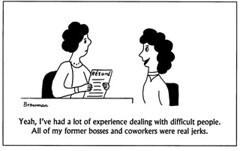
Since many of us have house guests around the holidays and want to enjoy our time with them, here is some excellent advice from Dale V. Atkins, PhD on how to get along with difficult people.
It’s inevitable that at some point we will have to spend time with people we don’t like. Maybe you don’t like your spouse’s best friend or your daughter’s boyfriend. Here are some simple guidelines for getting through these tricky situations...
YOU DON’T GET ALONG WELL WITH A RELATIVE
This is someone you can’t avoid completely but with whom you can spend only so much time before he/she starts to drive you crazy. Perhaps your sister is a slob, and you’re very tidy... or you have a parent you love, but who is overly critical.
With these people, it is best to keep activities confined to neutral zones, such as going to a movie or a restaurant. Usually, in these places, conversations don’t get too out of hand. With a movie, you’ll be able to talk only before and after, though you’re still spending time together. Also, these activities have built-in time limits, so you will be spending quality time with someone you love, but you’ll also be giving yourself an exit.
Keep in mind that while you may be tempted, it’s usually not worth your time to try to redesign someone’s personality. This almost always meets with resistance and can lead to fights. Just try to focus on the best aspects of his/her personality.
YOU DON’T LIKE YOUR PARTNER’S FRIEND
When you don’t like your partner’s friend, it can be difficult for both you and your partner. First, try your best to see things through your partner’s eyes, and try to find something you like or can appreciate about his friend. It can be something as simple as appreciating his sense of style or a joke he told once.
Let your partner know that it’s OK to do things without you, but try to attend if there’s an important event in the friend’s life -- for example, a wedding or a party for a promotion.
Never try to turn your partner against his friend. You don’t have to like him as much as your partner does, but you should respect the relationship. Don’t be rude or say nasty things about him.
YOUR PARTNER DOESN’T LIKE YOUR FRIEND
Let your partner know that it is OK to not like your friend, but it’s not OK to be rude or dismissive to him/her. Ask for the same respect to be shown to your friends that you show to your partner’s friends.
Cultivate your relationship with your friend without your partner, and don’t insist that everyone spend time together. Sometimes it’s easier to do this during the week, instead of on the weekend, when you may have family obligations.
YOU DON’T LIKE YOUR CHILD’S SPOUSE
One of the trickiest situations is when your child marries someone whom you do not like. It can be very hard to hide your feelings, but for the sake of your relationship with your child, it’s a good idea. Make every effort to get along with your child’s spouse, and do your best to care about him/her and show him respect.
Don’t say anything bad about your child’s spouse. You don’t want to put your child in the middle of a conflict between you and his spouse, and it is not fair to make your child choose between you and the spouse.
If there is a legitimate issue between you and your child’s spouse -- for example, if she is rude to you in public -- it’s best to pull her aside at another time and try to work it out.
YOU DON’T AGREE WITH A LOVED ONE’S CHOICES
It’s always hard to see someone you love making bad choices. Maybe a child is spending too much time partying at college or a friend is in a damaging relationship.
Talk to him/her in an open way, and share your concerns -- but don’t pressure and don’t be overly judgmental. Discuss with him the consequences of his actions. For example, if your child is partying at school more than studying, there is a real chance that he could flunk out.
Remember that he must choose to change -- you can’t force that on anyone. Tell him that you love him and that you always will, but that you don’t agree with his choices.
One way to reduce the stress you feel when seeing a friend or relative in situations you don’t agree with is to focus on your own wisdom and be grateful for what you have and who you are.
YOU DON’T LIKE YOUR HOUSEGUEST
Sometimes there’s no way to avoid having your castle invaded by people who get under your skin -- whether it is your partner’s old college roommate or your great-aunt Helen.
Try to carve out some time for yourself. Find something relaxing and recharging that you love to do. Take a quiet walk by yourself... have a relaxing bath... or meditate.
It may help to put your guests to work if they are staying with you for more than a few days. Having them do some dishes or fold some laundry can help to greatly reduce your own stress level. If you have less stress and less work to do, you might even enjoy your guests.
Regardless of what tools we use and how we cope we may face stress in dealing with difficult people during the holiday season. If we remember to practice self care whenever we begin to feel overwhelmed, we will be able to enjoy our family and friends and rejoice in the precious present.
Thursday, December 3, 2009
Why Can't I Clear Out The Fog?
Why is it that we can clearly see problems and solutions for others and yet when our own difficulties come into play we often remain in a fog?
We have the ability to practice a form of mental self defense where we either deny a challenge exists all together, or we rationalize away its severity. We may intellectualize our issues, not allowing ourselves to feel our emotions fully. We may do this to minimize pain and loss, or in an attempt to keep ourselves from recognizing the truth of our situation.
We may have begun learning this defense mechanism when we were children. If we lived in a family of origin where there was a great deal of chaos we may have needed this defense in order to survive. As we grow into adults we may find that our old defense mechanisms have begun to hinder our ability to fully participate in our own lives. We may be incapable of recognizing when we are being treated poorly. We may be unable to experience joy. We may be marching through life in a state of suspended emotional animation, existing, but not living.
When we begin our walk on the path of recovery we may initially find our emotions overwhelming and feel incapable of handling the waves of feelings that surge through our minds and bodies. As time progresses we become more comfortable within ourselves and feel capable of handling our strong emotions. We may recall that as children we may have had no one to guide us through the maze of our own feelings. They may have been strong and frightening, so we locked them away. Now that we are adults we can unlock those stored childhood feelings, process them in our adult minds and allow them to become a part of us.
In healthy families adults model appropriate reactions to strong emotions by regulating their responses. In dysfunctional families there may be no responsible adult present to serve as role model. The only model we see may be an emotionally frightened or enraged caretaker who is incapable of managing their own feelings and is acting out. If we grow up in an environment such as this, it is no wonder why we, as adults, may feel overwhelmed by strong emotions.
Learning to properly respond to feelings and challenges is a skill that is developed over years of observing role models and experimenting with our own abilities. If we have not developed these skills in childhood we may be emotionally immature.
We can learn the skills necessary to function in a healthy manner in all our interactions. It may take practice, learning new skills and a great deal of failure before we finally become adept at handling our strong feelings appropriately, but we can master the necessary skills with time and practice.
We have the ability to practice a form of mental self defense where we either deny a challenge exists all together, or we rationalize away its severity. We may intellectualize our issues, not allowing ourselves to feel our emotions fully. We may do this to minimize pain and loss, or in an attempt to keep ourselves from recognizing the truth of our situation.
We may have begun learning this defense mechanism when we were children. If we lived in a family of origin where there was a great deal of chaos we may have needed this defense in order to survive. As we grow into adults we may find that our old defense mechanisms have begun to hinder our ability to fully participate in our own lives. We may be incapable of recognizing when we are being treated poorly. We may be unable to experience joy. We may be marching through life in a state of suspended emotional animation, existing, but not living.
When we begin our walk on the path of recovery we may initially find our emotions overwhelming and feel incapable of handling the waves of feelings that surge through our minds and bodies. As time progresses we become more comfortable within ourselves and feel capable of handling our strong emotions. We may recall that as children we may have had no one to guide us through the maze of our own feelings. They may have been strong and frightening, so we locked them away. Now that we are adults we can unlock those stored childhood feelings, process them in our adult minds and allow them to become a part of us.
In healthy families adults model appropriate reactions to strong emotions by regulating their responses. In dysfunctional families there may be no responsible adult present to serve as role model. The only model we see may be an emotionally frightened or enraged caretaker who is incapable of managing their own feelings and is acting out. If we grow up in an environment such as this, it is no wonder why we, as adults, may feel overwhelmed by strong emotions.
Learning to properly respond to feelings and challenges is a skill that is developed over years of observing role models and experimenting with our own abilities. If we have not developed these skills in childhood we may be emotionally immature.
We can learn the skills necessary to function in a healthy manner in all our interactions. It may take practice, learning new skills and a great deal of failure before we finally become adept at handling our strong feelings appropriately, but we can master the necessary skills with time and practice.
Tuesday, November 3, 2009
Am I Practicing Self Care or Being Selfish?
Can self care become selfishness? How do we keep ourselves in balance?
Self care is an important part of our recovery effort. We learn to care for ourselves. We set effective boundaries, avoid the drama of others, stay balanced and keep ourselves from becoming overwhelmed in the face of lifes challenges. We practice discernment, use our tools to cope effectively, and in the process increase our self esteem.
As we begin to practice self care and learn to set effective boundaries we change. That change brings discomfort to our partner. We are no longer willing to do things that our partner can and should do for themselves. As a result, we begin to receive change back messages from our partner. This is their response to the stress our changes bring into their life. We exercise patience, showing our partner our committment to our recovery and allowing them the time to catch up. We use discernment to detect when we are being drawn into the drama of others, keeping ourselves in balance. When we find ourselves feeling overwhelmed as a result of the strength of our emotions, we use our tools to bring ourselves back into balance, recognizing that we cannot effectively help our partner to cope when we ourselves are overwhelmed.
As long as our self care is focused on achieving balance for the purpose of being able to be emotionally present in our relationship with our partner, as well as for our overall health, we will be practicing self care and not selfishness. When we allow our defense mechanisms and fear to control us, we lose sight of healthy boundaries and begin to focus too much on ourselves and our issues. When that happens too often, we may fail to be emotionally present for our partner and our relationship. We cannot be centered at all times, but we can strive for balance in a consistent manner.
During our growth and change our partner may feel unsure of our relationship. We take the initiative, reaffirming our love and devotion to both our partner and our relationship, allowing our partner to take these new patterns of interacting in stride. We recall that change creates discomfort and unease and give our partner plenty of time and the space necessary to adapt.
As we walk our path of recovery we find that we take three steps forward and two back testing our resolve and misstepping frequently. We will learn slowly, carefully, in our own time, how to maintain balance without seeming insensitive or too self involved. Recovery may not be easy, but we find that the rewards are well worth the effort as we feel our self esteem grow stronger day by day.
Self care is an important part of our recovery effort. We learn to care for ourselves. We set effective boundaries, avoid the drama of others, stay balanced and keep ourselves from becoming overwhelmed in the face of lifes challenges. We practice discernment, use our tools to cope effectively, and in the process increase our self esteem.
As we begin to practice self care and learn to set effective boundaries we change. That change brings discomfort to our partner. We are no longer willing to do things that our partner can and should do for themselves. As a result, we begin to receive change back messages from our partner. This is their response to the stress our changes bring into their life. We exercise patience, showing our partner our committment to our recovery and allowing them the time to catch up. We use discernment to detect when we are being drawn into the drama of others, keeping ourselves in balance. When we find ourselves feeling overwhelmed as a result of the strength of our emotions, we use our tools to bring ourselves back into balance, recognizing that we cannot effectively help our partner to cope when we ourselves are overwhelmed.
As long as our self care is focused on achieving balance for the purpose of being able to be emotionally present in our relationship with our partner, as well as for our overall health, we will be practicing self care and not selfishness. When we allow our defense mechanisms and fear to control us, we lose sight of healthy boundaries and begin to focus too much on ourselves and our issues. When that happens too often, we may fail to be emotionally present for our partner and our relationship. We cannot be centered at all times, but we can strive for balance in a consistent manner.
During our growth and change our partner may feel unsure of our relationship. We take the initiative, reaffirming our love and devotion to both our partner and our relationship, allowing our partner to take these new patterns of interacting in stride. We recall that change creates discomfort and unease and give our partner plenty of time and the space necessary to adapt.
As we walk our path of recovery we find that we take three steps forward and two back testing our resolve and misstepping frequently. We will learn slowly, carefully, in our own time, how to maintain balance without seeming insensitive or too self involved. Recovery may not be easy, but we find that the rewards are well worth the effort as we feel our self esteem grow stronger day by day.
Thursday, October 29, 2009
Self care or Selfishness... Which One Is It?
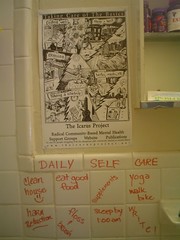 Image by CatrinaZ via Flickr
These are all excellent questions. Self care is all about learning to take care of ourselves so that we live balanced lives, avoid feeling overwhelmed and don't allow other peoples drama to control us.
That is a real mouthful. Learning to practice self care is a process. During that process we learn tools... actions to take to reduce our stress. We also learn boundaries... where we end and another person begins. Additionally we learn discernment... the ability to pay attention to our gut and our own innate capacity to know when, how much and whom to trust.
Learning these skills takes time and effort. It is a lifelong process that we continue to practice in our daily lives. We begin with tools. These are actions we can take to reduce stress. We learn deep breathing, guided meditation, visualization, affirmations, and techniques for self soothing. We begin to appreciate the quiet gentleness of taking a scented bath, reading a novel, sharing a phone call with a dear friend, having our evening meal by candlelight even when we are alone, taking a long walk, listening to the roar of the ocean or the breeze through the trees.
Boundaries... where we end and another person begins... can be a difficult lesson. We have control over one person in our lives... ourselves. We can cajole, beg, plead, order, dominate, manipulate, cry, scream, rant and try all methods of controlling others to no avail. Eventually we have to learn to let go. When we do we find that we are capable of saying no to requests we don't wish to indulge. We can ignore the behavior of others who are trying to control us and remember that we own our power. As we learn to respect others boundaries and our own we will reduce the drama in our lives and become more peaceful.
Discernment can be the toughest lesson of all. We have let others delude us for too long. We have believed the unbelievable, trusted the untrustworthy and forfeited our ability to trust ourselves in the process. Slowly, as we practice self care, we will come to trust our gut... to know when someone is not being honest... to listen between the lines... to pay attention to body language. We will learn once again how to trust ourselves, for that is the reality of our loss. We no longer trust our ability to discern the truth from lies.
As we practice self care we increase our self esteem one notch at a time. Like steps on a ladder we inch our way back to health and joy. We cannot underestimate how much we have lost, but we are on the road to recovery. In time we will find a healthier, happier self whom we can rely upon and trust.
These are the lessons of self care. We practice self care in our daily lives, using our tools, setting boundaries and slowly coming to learn discernment as we begin to trust ourselves once again. In this way we give ourselves the gift of increased self esteem.
![Reblog this post [with Zemanta]](http://img.zemanta.com/reblog_e.png?x-id=0324dfeb-323b-4dde-8378-424a4d7689ce)
Tuesday, October 27, 2009
Why is Gratefulness Necessary?
Gratefulness... what value does it have? Why is it necessary? How does it contribute to our recovery and healing?
When we work through our issues during the recovery process we come to understand why we made the choices we did. We open our eyes and see ourselves in truth. We strip away all the confusion and dithering and come to grips with what has transpired in our lives. We make no excuses for our situation and understand that we own our own power and can guide our lives along the path that has been laid before us.
We move through recovery advancing through the process one step at a time. We begin in denial and blame... afraid to acknowledge the truth of our situation. We work through those feelings until we come to a place where we can no longer define our situation in terms of wishful thinking. At this point we become angry as a result of all the pain and loss we have suffered due to our pasts and the choices we have made. As we work through our anger we come to a stage where we try to bargain our way out of the facing our feelings. When we finally are tired of trying to avoid our emotions we succumb to the truth. It is a time of extreme sadness and depression. We are overwhelmed with emotion and feel the full weight of our pain and loss. We grieve in earnest. In time we move through the pain to a place of acceptance. We understand that we cannot change what has happened and we accept that these events are a permanent part of our lives.
This process of recovery takes us through emotional upheaval. At the close of the process we are faced with the truth and our feelings as a regards our situation. There is yet one more step we must face in order to heal the wounds we suffered. We must learn to be grateful for our past and the choices we made in order to be freed from the emotional pain they carry.
This is the hardest step of all. How do we become grateful for the caretaker that abused us? How to we become grateful for the parent who incested us? How to we become grateful for the partner who abandoned us?
We become grateful through compassion. We begin to understand that we would not be who we are today without the lessons those events brought into our lives. We may not be able to be grateful for the events themselves, but we can be grateful for the growth and changes we experienced as a result of those events.
The child who grew up with an abusive caretaker becomes an especially capable parent. The adolescent who was incested becomes a counselor for those who have suffered that same crime and is more adept than others because of the empathy felt. The abandoned partner learns to be independent and develop their individuality, becoming their best self as a result.
While we are grieving we cannot even fathom ever feeling gratefulness toward the incidents that caused us such pain and loss. As we come through recovery and move toward our healthier self we learn that this last step is the one that places us on the road to emotional freedom.
When we work through our issues during the recovery process we come to understand why we made the choices we did. We open our eyes and see ourselves in truth. We strip away all the confusion and dithering and come to grips with what has transpired in our lives. We make no excuses for our situation and understand that we own our own power and can guide our lives along the path that has been laid before us.
We move through recovery advancing through the process one step at a time. We begin in denial and blame... afraid to acknowledge the truth of our situation. We work through those feelings until we come to a place where we can no longer define our situation in terms of wishful thinking. At this point we become angry as a result of all the pain and loss we have suffered due to our pasts and the choices we have made. As we work through our anger we come to a stage where we try to bargain our way out of the facing our feelings. When we finally are tired of trying to avoid our emotions we succumb to the truth. It is a time of extreme sadness and depression. We are overwhelmed with emotion and feel the full weight of our pain and loss. We grieve in earnest. In time we move through the pain to a place of acceptance. We understand that we cannot change what has happened and we accept that these events are a permanent part of our lives.
This process of recovery takes us through emotional upheaval. At the close of the process we are faced with the truth and our feelings as a regards our situation. There is yet one more step we must face in order to heal the wounds we suffered. We must learn to be grateful for our past and the choices we made in order to be freed from the emotional pain they carry.
This is the hardest step of all. How do we become grateful for the caretaker that abused us? How to we become grateful for the parent who incested us? How to we become grateful for the partner who abandoned us?
We become grateful through compassion. We begin to understand that we would not be who we are today without the lessons those events brought into our lives. We may not be able to be grateful for the events themselves, but we can be grateful for the growth and changes we experienced as a result of those events.
The child who grew up with an abusive caretaker becomes an especially capable parent. The adolescent who was incested becomes a counselor for those who have suffered that same crime and is more adept than others because of the empathy felt. The abandoned partner learns to be independent and develop their individuality, becoming their best self as a result.
While we are grieving we cannot even fathom ever feeling gratefulness toward the incidents that caused us such pain and loss. As we come through recovery and move toward our healthier self we learn that this last step is the one that places us on the road to emotional freedom.
Wednesday, October 21, 2009
Behind the Veil of Lies
When lying becomes a way of life... when we are unwilling to be ourselves and hide behind a veil of lies... when lying takes on a life of it's own... Why does this happen? Can we stop the pattern?
We are five years old. We are a home with the babysitter while Mom and Dad have dinner out with friends. The sitter lets us stay up past our bedtime and watch TV. It is fun to stay up late and be naughty. We scurry off to bed just before Mom and Dad arrive. The next day when Mom asks if we got to bed on time, we say yes. We have learned to lie. We have learned that we can be naughty, have fun, tell a lie and get away with it.
We are fifteen years old. We go out with friends and smoke pot. We forget our curfew and come home thirty minutes late. We tell our parents that we were watching a movie and wanted to see the end. They accept the story. We learn that we can take illicit drugs, feel good, lose track of time, miss our curfew, have fun, tell a lie and get away with it.
We are twenty five years old. We are married and have a brand new baby in our life. We aren't getting enough sleep, still have to work during the day and feel overwhelmed. A coworker seems quite empathetic toward our situation and gives us much needed sympathy and attention. We begin to have inappropriate feelings toward our coworker. Our partner is unaware of the developing situation. Eventually we enter into an affair. Over the next few months we find we feel confused and guilty and end the indiscretion. Our partner has noticed our distance and asks us if there is a problem in the relationship. We say we are tired and just need more rest. Eventually the baby begins to sleep through the night and our relationship stabilizes once again. We learn that we can have a brief affair, feel good, regret our decision, change our mind, not be discovered, tell a lie and get away with it.
We are now forty years old. We have lied our way in and out of circumstances for most of our life. As a result we have never learned how to deal with the consequences of our actions and have never developed a set of strong personal values. We have been able to manipulate our way out of sticky situations and never had to face the proverbial music. Our business life has been profitable. Then the economy collapses causing us to face massive losses. We cannot lie or manipulate our way out of this situation and have no skills with which to cope. We are lost.
When lies are not caught or challenged we may learn that we can cheat the lessons of life. That is inaccurate. Sooner or later everybody's bill comes due. As we have passed through the years manipulating situations and people through our lies we have never learned how to cope with actual consequences. When we can no longer wiggle out of our proverbial bed that we have made we feel lost and unable to cope.
At this point we have a choice. We can begin to learn coping skills and adopt tools to get us through life, or we can cry foul and decry the fairness of the world. It is the choice we should have learned as a child or teen, even as a young adult that is forced upon us at midlife. How we cope and the decisions we make will be a true test of our character. Will we whine and cry? Or will we finally step up to the plate as a responsible adult? The choice is ours.
We are five years old. We are a home with the babysitter while Mom and Dad have dinner out with friends. The sitter lets us stay up past our bedtime and watch TV. It is fun to stay up late and be naughty. We scurry off to bed just before Mom and Dad arrive. The next day when Mom asks if we got to bed on time, we say yes. We have learned to lie. We have learned that we can be naughty, have fun, tell a lie and get away with it.
We are fifteen years old. We go out with friends and smoke pot. We forget our curfew and come home thirty minutes late. We tell our parents that we were watching a movie and wanted to see the end. They accept the story. We learn that we can take illicit drugs, feel good, lose track of time, miss our curfew, have fun, tell a lie and get away with it.
We are twenty five years old. We are married and have a brand new baby in our life. We aren't getting enough sleep, still have to work during the day and feel overwhelmed. A coworker seems quite empathetic toward our situation and gives us much needed sympathy and attention. We begin to have inappropriate feelings toward our coworker. Our partner is unaware of the developing situation. Eventually we enter into an affair. Over the next few months we find we feel confused and guilty and end the indiscretion. Our partner has noticed our distance and asks us if there is a problem in the relationship. We say we are tired and just need more rest. Eventually the baby begins to sleep through the night and our relationship stabilizes once again. We learn that we can have a brief affair, feel good, regret our decision, change our mind, not be discovered, tell a lie and get away with it.
We are now forty years old. We have lied our way in and out of circumstances for most of our life. As a result we have never learned how to deal with the consequences of our actions and have never developed a set of strong personal values. We have been able to manipulate our way out of sticky situations and never had to face the proverbial music. Our business life has been profitable. Then the economy collapses causing us to face massive losses. We cannot lie or manipulate our way out of this situation and have no skills with which to cope. We are lost.
When lies are not caught or challenged we may learn that we can cheat the lessons of life. That is inaccurate. Sooner or later everybody's bill comes due. As we have passed through the years manipulating situations and people through our lies we have never learned how to cope with actual consequences. When we can no longer wiggle out of our proverbial bed that we have made we feel lost and unable to cope.
At this point we have a choice. We can begin to learn coping skills and adopt tools to get us through life, or we can cry foul and decry the fairness of the world. It is the choice we should have learned as a child or teen, even as a young adult that is forced upon us at midlife. How we cope and the decisions we make will be a true test of our character. Will we whine and cry? Or will we finally step up to the plate as a responsible adult? The choice is ours.
Thursday, September 10, 2009
Betrayed!!
How do we cope when we are betrayed? What do we do to take care of ourselves? How can we heal our hurts?
When our partner betrays us, whether it be via an adulterous relationship or through another breach, we are injured at our core. This is someone we have allowed into our lives in a very deep and meaningful way. We have become intimate with our partner in a variety of areas which we do not share with any other persons. As a result we feel crushed, sometimes lost. We experience our loss in the most personal of ways. This type of betrayal carries with it the added pain of personal rejection. Our partner is someone who knows us inside and out and has rejected us for our inner selves in a very painful and personal way.
At first we are shocked, infuriated and hurt. We may react with anger and fury. As time passes and the reality of our situation sinks in we may become hostile and cold toward our partner. If we have been betrayed we may wish to end the relationship. Or, we may wish to continue the relationship, but may not know how to get past the hurt and resentment. We have lost the trust shared in our relationship.
It is imperative that we not make life altering decisions during this initial time. We are still very raw and may be unable to rationally approach the situation. We may be too angry to think long term and may be incapable of thinking clearly.
Our first path should be to find ourselves a counselor with whom we feel comfortable where we can sort out our feelings and decide how to move forward. This may take some time. We must be patient. As we work through our feelings of hostility and pain we may discover that we have some portion of responsibility for the failure in our relationship. We have many difficult decisions ahead and we should not make them alone.
With the help of our counselor we begin to rebuild our shattered self esteem. Slowly, one step at a time we trudge back from the brink toward a healthier place. At first we have many days when we feel sad or angry. As time passes and we experience healing we have a few better days. Eventually we have many days when we feel at peace with ourselves and our situation. This healing process happens slowly, three steps forward and two steps back.
We practice self care, allowing ourselves to feel all our feelings fully, process what has happened to us and move forward. When we feel overwhelmed we take steps to soothe ourselves back into balance. We may call a friend, take a walk, enjoy a hot bath, read a book, watch a favorite movie or just take a nap. As we learn to care for ourselves we increase our self esteem giving ourselves the gift of a healthier, more joy filled future.
When our partner betrays us, whether it be via an adulterous relationship or through another breach, we are injured at our core. This is someone we have allowed into our lives in a very deep and meaningful way. We have become intimate with our partner in a variety of areas which we do not share with any other persons. As a result we feel crushed, sometimes lost. We experience our loss in the most personal of ways. This type of betrayal carries with it the added pain of personal rejection. Our partner is someone who knows us inside and out and has rejected us for our inner selves in a very painful and personal way.
At first we are shocked, infuriated and hurt. We may react with anger and fury. As time passes and the reality of our situation sinks in we may become hostile and cold toward our partner. If we have been betrayed we may wish to end the relationship. Or, we may wish to continue the relationship, but may not know how to get past the hurt and resentment. We have lost the trust shared in our relationship.
It is imperative that we not make life altering decisions during this initial time. We are still very raw and may be unable to rationally approach the situation. We may be too angry to think long term and may be incapable of thinking clearly.
Our first path should be to find ourselves a counselor with whom we feel comfortable where we can sort out our feelings and decide how to move forward. This may take some time. We must be patient. As we work through our feelings of hostility and pain we may discover that we have some portion of responsibility for the failure in our relationship. We have many difficult decisions ahead and we should not make them alone.
With the help of our counselor we begin to rebuild our shattered self esteem. Slowly, one step at a time we trudge back from the brink toward a healthier place. At first we have many days when we feel sad or angry. As time passes and we experience healing we have a few better days. Eventually we have many days when we feel at peace with ourselves and our situation. This healing process happens slowly, three steps forward and two steps back.
We practice self care, allowing ourselves to feel all our feelings fully, process what has happened to us and move forward. When we feel overwhelmed we take steps to soothe ourselves back into balance. We may call a friend, take a walk, enjoy a hot bath, read a book, watch a favorite movie or just take a nap. As we learn to care for ourselves we increase our self esteem giving ourselves the gift of a healthier, more joy filled future.
Wednesday, August 12, 2009
How Do We Heal Our Wounds?
 Image by cobalt123 via Flickr
When we are small we don't have the vocabulary to express our feelings or emotions. We rely on our caretakers to interpret our surroundings for us. When our caretakers are out of balance and unable to handle circumstances, they may fail to interpret them to us. This leaves us unable to understand our environment. We may not know how to handle what has happened, so we fail to integrate accurate information into our sense of self.
Over time as these occurrences continue, we lose parts of our self in the process. We may begin to dissociate from our feelings of being lovable or valuable. We may begin to believe that we must perform for acceptance. We may fear abandonment or losing a loved one. When we operate from a basis of fear we shrink our lives smaller and smaller as time passes.
When we enter into recovery we discover old hurts and mixed messages from the past. We find places within where we carry old bruises from events which we were unable to interpret as children. We unlock parts of our selves that we have been unable to access since our childhood.
If we have been numb to our feelings for many years we may find experiencing emotions overwhelming and possibly painful in the beginning. We may swing from feeling nothing to feeling everything. As we continue on our path of recovery we will lessen our tendency to swing wildly from one extreme to another and settle down to a balanced center.
If we have believed that we were unlovable or not valuable we may need to rebuild our self esteem through the use of our tools and self care. This will take time. We must be patient. It has taken many years for us to lose our self love and it will not heal quickly. If we are persistent we will reap the rewards that come with continued effort.
If we have been performing for acceptance we may need to begin to allow ourselves to be seen for who we truly are without pretense. This may be quite frightening until we discover that we are loved and valued for our inner self. Our tendency to perform may be strong. We may take three steps forward and two steps back time and time again as we learn to trust. We will find we can trust our gut and our ability to discern who is trustworthy.
If we have been abandoned in the past we may need to work on trust issues surrounding intimacy. This may be especially painful and scary in the initial stages. We are so accustomed to waiting for the other shoe to drop... because in the past, it usually did. Intimacy itself may have been linked to pain in our past. We take our time allowing ourselves to experience intimacy in small amounts, adjusting to the initial discomfort as we may experience some anxiety. As we continue to have positive experiences we will become more comfortable as time progresses. Eventually we will be able to revel in the joy of true intimacy in our relationships.
We may need to unlearn our tendency to be hypervigilant, allowing situations to unfold naturally without manipulation. This too can be overwhelming and feel out of control to us. We use our tools to calm ourselves and remind us that our higher power has our best interests at heart. We may not want to experience option B and have always manipulated the situation to create option A, but we never had the chance to walk our path where we find the best option of all... option C... the one our higher power always intended for us.
As we walk our path of recovery we discover that we can enjoy experiencing emotions once again. We find we are lovable and valuable. We realize that we do not have to perform to be accepted but are accepted as we are. The most valuable lesson we learn, however, is that no one can abandon us but ourselves. The most others can do is leave. As long as we have ourselves we will never be lonely again.

Thursday, July 30, 2009
I'm Unhappy, Why Can't I Leave?
 Image via Wikipedia
These questions deserve an answer. When we enter into a relationship we enjoy the newly found pleasurable interactions. Our brain reacts to this exchange by releasing dopamine, a neurotransmitter in the brain, when the nucleus accumbens or pleasure center is stimulated. Dopamine is a feel good chemical in the body. Therefore the more we experience good times with our new partner the more dopamine we produce, and the more pleasure we feel.
The prefrontal cortex, the thinking part of the brain, is concerned with rational decision making and long term consequences. The prefrontal cortex tracks every moment spent with our new partner. As our relationship continues over the years, we begin to notice more and more instances when our partner is irritating. This irritation causes the amount of dopamine produced by our now less stimulated pleasure center to drop. We don't feel as good as we did before. The thinking brain begins to weigh the decision to remain in the relationship against the amount of pleasure received. As dopamine levels drop further, the thinking brain begins to lean toward the decision of leaving the relationship.
However this part of the brain doesn't make all the decisions alone. The pleasure center has developed an attachment as a result of all the dopamine released over the years. Now whenever dopamine is released the pleasure center revels in its arrival with strong good feelings. We have become hooked on our addiction to dopamine and the resultant good feelings.
Another area of the brain which weighs in during decision making is the amygdala. The amygdala formulates decisions based on impulse and emotion. This may account for our tendency to feel the urge to run when the going gets tough, or to stay when the relationship is proceeding smoothly.
Over time as the relationship degrades we receive less and less dopamine forcing our pleasure center to starve. The amygdala weighs in on the decision impulsively, first one way then another. The thinking brain begins to make the decision that leaving the relationship is the logical course of action. Different parts of the brain begin working toward determining the best outcome. When these parts disagree, as in the thinking brain, amygdala and the pleasure center, we experience cognitive dissonance.
Cognitive dissonance exists when we hold two contradictory ideas in our mind at the same time. This may cause us to experience uncomfortable feelings such as: anxiety, shame, anger and stress. At this point we have two choices, we can reconcile our ideas and make a decision that we feel is in our best interest, or we can begin to rationalize. If we choose to rationalize - creating false reasons or justifications to support a decision we know is not in our best interest - this can lead to confirmation bias and defense mechanisms kicking it to support the ego.
Overall we discover that a seemingly simple decision, leaving a relationship that is causing unhappiness and pain, is not easy. The loss of the good feelings we initially experienced in the relationship coupled with attachment, causes unhappiness and pain. When the pain of staying in the relationship is outweighed by the pain of leaving the relationship, we continue to stay, waiting for the occasional burst of dopamine. As the relationship collapses and the pain of staying outweighs the pain of leaving, we eventually make the choice to move on.
Although we will experience pain and loss in either instance, the short term pain of severing the ties with our partner will decrease over time and we will once again begin the task of rebuilding our self esteem and using our tools to ensure our recovery.
Thursday, May 21, 2009
Processing Grief
Working through grief is one of the most difficult challenges we face in our lives. When we lose someone we love, whether through death, divorce or simply a relationship that ends, we can feel a great deal of pain and anguish. It may be helpful during grieving to be aware that there is a range of reactions, and that all may be part of the process.
Initially there is a reaction of shock at the severity of the loss. We may embrace denial in the form of, "Why is this happening to me?". Our feelings may be numb or we may not yet fully comprehend the loss itself. Wishing to return to life before the loss is a common response as well. The overwhelming pain has not been fully processed at this stage. Denial is our defense mechanism protecting our psyche from the full brunt of the loss.
Eventually we can no longer deny what has happened. At this point we may begin to feel angry. We may be angry at the person we have lost, angry with our higher power, angry with other loved ones in our lives for their perceived part in the loss. We may remain angry for an extended period of time as we grapple with the seriousness of what has transpired. Anger too is a defense against the overwhelming feelings of loss.
After a time of extended anger we may move into bargaining. We are trying to mitigate the loss. This is a time of rationalizing and trading. If we have lost someone we love we may attempt reconciliation even if it is against our best interest to do so. If someone has passed away we may attempt in vain to bargain with our higher power for their return.
When we have passed the stage of needing our defense mechanisms and are finally faced with the full brunt of our loss we face depression. We may feel incredibly sad, hopeless, numb, filled with despair or even suicidal at times. We are overwhelmed with grief and the loss of both the person, and the dreams and hopes we held onto in the relationship. This is an extremely painful and vulnerable time. We may need help at this juncture to cope with the extent of the loss. It is important that we allow ourselves to grieve and give ourselves time to heal our wounds.
Finally we come to acceptance. We cannot change what has happened. We take the best memories we have and continue with our lives. If we have lost someone we love due to divorce or the ending of a relationship this may be the time we come to terms with the facts. We let go of blame and retribution and begin the process of healing in earnest. If someone has passed away we enjoy the memories we have of the wonderful times we shared while they were on this earth. In this way we keep their memory alive in our hearts and keep them close to us in thought.
The transition from relationship to loss can be overwhelming and painful. We do not have to make the journey alone. There are support groups available at most major hospitals and religious institutions. There is support in counseling and online. Trying to handle grief alone may be overwhelming and lead to isolation and long term depression.
It is common to feel like we may not survive serious loss, but we will begin to feel better. We may find we have mostly sad days initially, but over time we will begin to have better days until finally we have settled into our lives again. With the help of our family, friends, support system and our higher power we will triumph over loss and once again feel a part of life.
Initially there is a reaction of shock at the severity of the loss. We may embrace denial in the form of, "Why is this happening to me?". Our feelings may be numb or we may not yet fully comprehend the loss itself. Wishing to return to life before the loss is a common response as well. The overwhelming pain has not been fully processed at this stage. Denial is our defense mechanism protecting our psyche from the full brunt of the loss.
Eventually we can no longer deny what has happened. At this point we may begin to feel angry. We may be angry at the person we have lost, angry with our higher power, angry with other loved ones in our lives for their perceived part in the loss. We may remain angry for an extended period of time as we grapple with the seriousness of what has transpired. Anger too is a defense against the overwhelming feelings of loss.
After a time of extended anger we may move into bargaining. We are trying to mitigate the loss. This is a time of rationalizing and trading. If we have lost someone we love we may attempt reconciliation even if it is against our best interest to do so. If someone has passed away we may attempt in vain to bargain with our higher power for their return.
When we have passed the stage of needing our defense mechanisms and are finally faced with the full brunt of our loss we face depression. We may feel incredibly sad, hopeless, numb, filled with despair or even suicidal at times. We are overwhelmed with grief and the loss of both the person, and the dreams and hopes we held onto in the relationship. This is an extremely painful and vulnerable time. We may need help at this juncture to cope with the extent of the loss. It is important that we allow ourselves to grieve and give ourselves time to heal our wounds.
Finally we come to acceptance. We cannot change what has happened. We take the best memories we have and continue with our lives. If we have lost someone we love due to divorce or the ending of a relationship this may be the time we come to terms with the facts. We let go of blame and retribution and begin the process of healing in earnest. If someone has passed away we enjoy the memories we have of the wonderful times we shared while they were on this earth. In this way we keep their memory alive in our hearts and keep them close to us in thought.
The transition from relationship to loss can be overwhelming and painful. We do not have to make the journey alone. There are support groups available at most major hospitals and religious institutions. There is support in counseling and online. Trying to handle grief alone may be overwhelming and lead to isolation and long term depression.
It is common to feel like we may not survive serious loss, but we will begin to feel better. We may find we have mostly sad days initially, but over time we will begin to have better days until finally we have settled into our lives again. With the help of our family, friends, support system and our higher power we will triumph over loss and once again feel a part of life.
Sunday, April 19, 2009
Nightmares, Flashbacks, Anxiety, Rage… Is This You?
Every so often we have the priviledge to have a guest on the blog. Tonight is one of those special times. I would like to thank Michele Rosenthal for her efforts, research and expertise in this most important area of PTSD. And now, dear followers, here's Michele...
Are you haunted by memories? Do you have nightmares, flashbacks and intrusive thoughts about a traumatic experience? Have you tried to let go but can’t seem to escape anxiety and stress? Do constantly feel you are in danger? Have you shut down emotionally and feel numb? Do you feel detached from yourself, the people around you and the present moment? Do you have trouble connecting emotionally with friends, family, colleagues or lovers? Does it seem impossible to concentrate? Are you unable to surface from depression? Do you get angry and rage at the slightest provocation?
If you answered yes to the majority of these questions you might be struggling with symptoms of Post-Traumatic Stress Disorder (PTSD). You’re not alone. What you may be experiencing is common among millions of people. Recent studies estimate that 70% of all adults in the United States may experience a traumatic event in their lifetime. Of those, up to one in five may develop PTSD. Estimates propose that at any given time 5% of the population may be struggling with PTSD – that’s over 15 million people. That number grows every day and doesn’t include the number of cases remaining undiagnosed.
The good news is, if you’ve recognized yourself you can be on the road to healing.
Medicine.net describes PTSD as,“…an emotional illness that develops as a result of a terribly frightening, life-threatening, or otherwise highly unsafe experience. PTSD sufferers re-experience the traumatic event or events in some way, tend to avoid places, people, or other things that remind them of the event ... and are exquisitely sensitive to normal life experiences.”
PTSD surfaces throughout civilian and military history as an extreme emotional reaction to either being involved in or witnessing overwhelming circumstances. In addition to war, the causes of PTSD include natural disasters, domestic violence, rape, physical assault, child abuse, terrorism, random acts of violence and major catastrophic events such as plane crashes, car accidents and industrial calamities.
That’s a long list. We survive all kinds of calamities and can be left with the task of recovering from survival. Trauma changes us. We need to be able to adapt and carry on. It’s tough to do this when the past may have us in it’s tight grasp. We can use our conscious brain, to decide to be done with what happened, but it’s not always possible. Trauma can be hard wired into our sub-conscious mind which determines to protect us from harm. The fact that the danger no longer exists is immaterial, the subconscious continues to function as if it does. This may cause us to live in the shadow of fear and uncertainty, unable to move forward with our lives.
In addition to one on one talk therapy there are other treatments that may lessen the effect of trauma. Some examples, as recommended by the American Psychiatric Association, http://www.healthyminds.org/multimedia/ptsd.pdf , include: Cognitive Behavior Therapy, Exposure Therapy, Psychodynamic Therapy, Family Therapy, and Peer Discussion Group Therapy.
If you believe you or someone you love may be suffering from PTSD you may wish to take the PTSD self test available on line through the Anxiety Disorder Association of America. http://www.adaa.org/GettingHelp/SelfHelpTests/selftest_PTSD.asp . For more information on PTSD contact the National Mental Health Association on line at http://www.nmha.org/.
Healing PTSD begins with our decision to conquer the past and create the future. Regardless of how we feel, the choice to heal is always ours. Commit today!!
Michele Rosenthal
parasitesof.themind@yahoo.com
http://parasitesofthemind.blogspot.com -
A blog about PTSD awareness, education, treatment & self-empowered healing.
Are you haunted by memories? Do you have nightmares, flashbacks and intrusive thoughts about a traumatic experience? Have you tried to let go but can’t seem to escape anxiety and stress? Do constantly feel you are in danger? Have you shut down emotionally and feel numb? Do you feel detached from yourself, the people around you and the present moment? Do you have trouble connecting emotionally with friends, family, colleagues or lovers? Does it seem impossible to concentrate? Are you unable to surface from depression? Do you get angry and rage at the slightest provocation?
If you answered yes to the majority of these questions you might be struggling with symptoms of Post-Traumatic Stress Disorder (PTSD). You’re not alone. What you may be experiencing is common among millions of people. Recent studies estimate that 70% of all adults in the United States may experience a traumatic event in their lifetime. Of those, up to one in five may develop PTSD. Estimates propose that at any given time 5% of the population may be struggling with PTSD – that’s over 15 million people. That number grows every day and doesn’t include the number of cases remaining undiagnosed.
The good news is, if you’ve recognized yourself you can be on the road to healing.
Medicine.net describes PTSD as,“…an emotional illness that develops as a result of a terribly frightening, life-threatening, or otherwise highly unsafe experience. PTSD sufferers re-experience the traumatic event or events in some way, tend to avoid places, people, or other things that remind them of the event ... and are exquisitely sensitive to normal life experiences.”
PTSD surfaces throughout civilian and military history as an extreme emotional reaction to either being involved in or witnessing overwhelming circumstances. In addition to war, the causes of PTSD include natural disasters, domestic violence, rape, physical assault, child abuse, terrorism, random acts of violence and major catastrophic events such as plane crashes, car accidents and industrial calamities.
That’s a long list. We survive all kinds of calamities and can be left with the task of recovering from survival. Trauma changes us. We need to be able to adapt and carry on. It’s tough to do this when the past may have us in it’s tight grasp. We can use our conscious brain, to decide to be done with what happened, but it’s not always possible. Trauma can be hard wired into our sub-conscious mind which determines to protect us from harm. The fact that the danger no longer exists is immaterial, the subconscious continues to function as if it does. This may cause us to live in the shadow of fear and uncertainty, unable to move forward with our lives.
In addition to one on one talk therapy there are other treatments that may lessen the effect of trauma. Some examples, as recommended by the American Psychiatric Association, http://www.healthyminds.org/multimedia/ptsd.pdf , include: Cognitive Behavior Therapy, Exposure Therapy, Psychodynamic Therapy, Family Therapy, and Peer Discussion Group Therapy.
If you believe you or someone you love may be suffering from PTSD you may wish to take the PTSD self test available on line through the Anxiety Disorder Association of America. http://www.adaa.org/GettingHelp/SelfHelpTests/selftest_PTSD.asp . For more information on PTSD contact the National Mental Health Association on line at http://www.nmha.org/.
Healing PTSD begins with our decision to conquer the past and create the future. Regardless of how we feel, the choice to heal is always ours. Commit today!!
Michele Rosenthal
parasitesof.themind@yahoo.com
http://parasitesofthemind.blogspot.com -
A blog about PTSD awareness, education, treatment & self-empowered healing.
Friday, April 17, 2009
Tools, Glorious Tools - Part Four
Recovery is not complete without tools to take us beyond the drama of the moment into long term health. Patience, managing expectations, deep breathing, journaling and reading are all tools that help us deal with the immediate stress of our daily lives. Tools that are life changing are more elusive, harder to grasp and harder to implement.
Meditation is a state of deep relaxation where we work to empty our minds of all the clutter of the day. We give our brain a time out from the constant work of processing the innumerable messages that bombard us throughout our daily lives. There are many styles of meditation. One in particular is called guided imagery. This type of meditation is a form requiring a guide. The guide may be ourselves or another that we choose. We are first lead through a breathing and relaxation exercise. Following this we are guided through a vivid journey within our minds. We may view past events with a new perspective. We may take a walk on the beach. Whatever we view complements our state of deep relaxation. When we complete our meditation we feel refreshed and relaxed. This tool is one we can use on our own to give ourselves a boost of rejuvenation during stressful times.
One of the most difficult tools for many of us to accept is the concept of a higher power. Many of us were deeply wounded as children. We may have stopped believing that there might be more to life than what we can observe with our five senses. We may be angry with our higher power, feeling abandoned to live through pain, fear and sorrow. It may take some time for us to regain the faith that there is more to our lives than that which we sense. That is part of the process. We begin with baby steps, opening ourselves to the possibility that there may be more. Our higher power can be whatever we choose. It is not a defined concept, nor one based in religion. For some it is the stars, for others the earth, for still others an ethereal spiritual being. There is no correct answer. We use whatever will bring us to a place of faith.
Why does a part of recovery focus on having faith in a higher power? We change our perspective. We become part of a larger world when we enter the journey of recovery. We begin to see that we are not unique and that our pain, fears and shame are a commonality that binds those in recovery together. We learn that we are not alone. This is a powerful concept allowing us to feel that we belong. We are now part of the recovery community. We begin in small increments asking for guidance and wisdom. As we move along our journey we watch for sign posts along the way. We are on a path that has been chosen for us. As we put one foot in front of the other we are reminded that we have already come a long way from our humble beginnings.
Our choice to remain open to the possibility of a higher power is our entry into the realm of spirituality. We begin to allow ourselves to consider the possibility that we are more than just a human body. We open our minds to the thought that we may be a spiritual being housed within a human body. The concepts of balance have existed for eons; yin and yang, dark and light, good and evil, heaven and hell, God and Satan, Adam and Eve, Mother Earth and Father Time. All these ideas stem from the concepts of balance… that for each and every positive in the universe, there is an opposing force.
We strive to create balance in our lives. One of the ways we do this is by opening ourselves to the concept of allowing situations to develop naturally without trying to force results. If we can begin to accept that we may be spiritual beings, we can then relax and allow the natural unfolding of events. This brings us to a healthier place where we feel calm, centered and balanced instead of stresses, harried and overwhelmed.
Our tools are our life line. We use them in our daily lives to enhance our ability to remain balanced and to increase our self esteem. We practice patience, managing expectations, deep breathing, journaling and reading on a daily basis. We use meditation and guided imagery as a form of deep relaxation and renewal. We open ourselves to the possibility that there may be more to the universe than we can sense and begin to have faith in a higher power. Our spiritual lives blossom and we experience the peace and tranquility that we crave. In this way we give ourselves the gift of recovery.
Meditation is a state of deep relaxation where we work to empty our minds of all the clutter of the day. We give our brain a time out from the constant work of processing the innumerable messages that bombard us throughout our daily lives. There are many styles of meditation. One in particular is called guided imagery. This type of meditation is a form requiring a guide. The guide may be ourselves or another that we choose. We are first lead through a breathing and relaxation exercise. Following this we are guided through a vivid journey within our minds. We may view past events with a new perspective. We may take a walk on the beach. Whatever we view complements our state of deep relaxation. When we complete our meditation we feel refreshed and relaxed. This tool is one we can use on our own to give ourselves a boost of rejuvenation during stressful times.
One of the most difficult tools for many of us to accept is the concept of a higher power. Many of us were deeply wounded as children. We may have stopped believing that there might be more to life than what we can observe with our five senses. We may be angry with our higher power, feeling abandoned to live through pain, fear and sorrow. It may take some time for us to regain the faith that there is more to our lives than that which we sense. That is part of the process. We begin with baby steps, opening ourselves to the possibility that there may be more. Our higher power can be whatever we choose. It is not a defined concept, nor one based in religion. For some it is the stars, for others the earth, for still others an ethereal spiritual being. There is no correct answer. We use whatever will bring us to a place of faith.
Why does a part of recovery focus on having faith in a higher power? We change our perspective. We become part of a larger world when we enter the journey of recovery. We begin to see that we are not unique and that our pain, fears and shame are a commonality that binds those in recovery together. We learn that we are not alone. This is a powerful concept allowing us to feel that we belong. We are now part of the recovery community. We begin in small increments asking for guidance and wisdom. As we move along our journey we watch for sign posts along the way. We are on a path that has been chosen for us. As we put one foot in front of the other we are reminded that we have already come a long way from our humble beginnings.
Our choice to remain open to the possibility of a higher power is our entry into the realm of spirituality. We begin to allow ourselves to consider the possibility that we are more than just a human body. We open our minds to the thought that we may be a spiritual being housed within a human body. The concepts of balance have existed for eons; yin and yang, dark and light, good and evil, heaven and hell, God and Satan, Adam and Eve, Mother Earth and Father Time. All these ideas stem from the concepts of balance… that for each and every positive in the universe, there is an opposing force.
We strive to create balance in our lives. One of the ways we do this is by opening ourselves to the concept of allowing situations to develop naturally without trying to force results. If we can begin to accept that we may be spiritual beings, we can then relax and allow the natural unfolding of events. This brings us to a healthier place where we feel calm, centered and balanced instead of stresses, harried and overwhelmed.
Our tools are our life line. We use them in our daily lives to enhance our ability to remain balanced and to increase our self esteem. We practice patience, managing expectations, deep breathing, journaling and reading on a daily basis. We use meditation and guided imagery as a form of deep relaxation and renewal. We open ourselves to the possibility that there may be more to the universe than we can sense and begin to have faith in a higher power. Our spiritual lives blossom and we experience the peace and tranquility that we crave. In this way we give ourselves the gift of recovery.
Wednesday, April 15, 2009
Tools, Glorious Tools - Part Two
In our recovery process we practice patience and manage our expectations. We keep in mind that habits developed over many years may take much time to unlearn. We expect to make mistakes, to backslide, to feel regret when we repeat old patterns of behavior that no longer function for our benefit.
We employ many tools in our daily lives to help us cope with the changes we are making in ourselves and the responses we are cultivating to take the place of our old defense mechanisms. We learn that defense mechanisms are automatic and that we have been employing them without even realizing it. This is the core of how we protected ourselves during our childhood. We have relied on these defenses for a long time. Giving them up creates a void. We fill that void with healthy behavior by using our tools.
In working to change this pattern we strive to become more aware of ourselves and our feelings. We may feel overwhelmed initially by the surge of strong emotions and the feelings that follow. It may take time for us to be able to put words to our feelings if we have been reacting on auto pilot for a lengthy period of time. We allow ourselves to begin to experience all our emotions. This can create much discomfort. We will adjust to the newness of it over time. In the interim we use several tools to help us cope.
We learn deep breathing. When we are tense we tend to breathe in a less effective manner. We breathe with our upper chest and take short, quick, shallow breaths. When we focus on our breathing we take longer, slower, deeper breaths that inflate our abdomen and pull air all the way down to the lower part of our lungs. This allows more oxygen into our blood stream and aids in relaxation. We breathe in through our noses, hold briefly for a count of five, then out through our mouths. As we repeat this process we feel a sense of relaxation flow through ourselves. We are adding vital oxygen to our bodies that have been depleted through stress.
Journaling is an important tool in our tool bag. We write out our feelings, thoughts and opinions about present circumstances and persons in our lives. We may include related memories that have caused us pain in the past, recalled as a result of a particular event. This gives us an outlet for our emotions as well as a way to experience more clarity with regard to our feelings. We may be new at processing our emotions. Journaling gives us an edge. We have our journal entries available for review as we progress through recovery. We can look back at a snapshot of ourselves and see our growth.
Having patience with ourselves, managing our expectations of our progress, allowing ourselves to feel our emotions, deep breathing and journaling… these initial tools help us develop increased self esteem as we use them in our daily lives. We give ourselves the gift of recovery as we practice using our tools to gain emotional balance.
We employ many tools in our daily lives to help us cope with the changes we are making in ourselves and the responses we are cultivating to take the place of our old defense mechanisms. We learn that defense mechanisms are automatic and that we have been employing them without even realizing it. This is the core of how we protected ourselves during our childhood. We have relied on these defenses for a long time. Giving them up creates a void. We fill that void with healthy behavior by using our tools.
In working to change this pattern we strive to become more aware of ourselves and our feelings. We may feel overwhelmed initially by the surge of strong emotions and the feelings that follow. It may take time for us to be able to put words to our feelings if we have been reacting on auto pilot for a lengthy period of time. We allow ourselves to begin to experience all our emotions. This can create much discomfort. We will adjust to the newness of it over time. In the interim we use several tools to help us cope.
We learn deep breathing. When we are tense we tend to breathe in a less effective manner. We breathe with our upper chest and take short, quick, shallow breaths. When we focus on our breathing we take longer, slower, deeper breaths that inflate our abdomen and pull air all the way down to the lower part of our lungs. This allows more oxygen into our blood stream and aids in relaxation. We breathe in through our noses, hold briefly for a count of five, then out through our mouths. As we repeat this process we feel a sense of relaxation flow through ourselves. We are adding vital oxygen to our bodies that have been depleted through stress.
Journaling is an important tool in our tool bag. We write out our feelings, thoughts and opinions about present circumstances and persons in our lives. We may include related memories that have caused us pain in the past, recalled as a result of a particular event. This gives us an outlet for our emotions as well as a way to experience more clarity with regard to our feelings. We may be new at processing our emotions. Journaling gives us an edge. We have our journal entries available for review as we progress through recovery. We can look back at a snapshot of ourselves and see our growth.
Having patience with ourselves, managing our expectations of our progress, allowing ourselves to feel our emotions, deep breathing and journaling… these initial tools help us develop increased self esteem as we use them in our daily lives. We give ourselves the gift of recovery as we practice using our tools to gain emotional balance.
Friday, April 3, 2009
Physical Health and Emotional Health are Connected
One of the most important areas of our lives is our health. When we don't practice self care in our daily lives we can decrease our immune response and increase our chance of illness. It is vital that we practice healthy living principles to have the physical energy to support ourselves emotionally.
When we are hungry, angry, lonely, tired or stressed (HALTS) we may not have the energy we need to respond appropriately to our surroundings. When we feel ourselves reacting instead of responding to our environment, we check to see if we are dissipating our energy with the acronym HALTS. If we are facing any of these areas we can take a time out from our situation and practice self care. We can avoid reacting inappropriately if we do this brief self assessment (HALTS) when we first feel ourselves slipping.
When we are hungry we may become more irritable or hostile. Our blood sugar is falling and this may create a feeling within us that drives our mood. When we take a moment to care for our bodies and allow ourselves to rebalance our blood sugar, a balanced mood follows.
If we are upset about an unresolved issue, we may let those feelings overflow onto our current situation without realizing it. We can give ourselves a time out and practice some self care... meditation, guided imagery, taking a walk or calling a friend in order to cool off and gain perspective and insight into our emotional self.
If we are feeling lonely we ask ourselves if we are lonely or just alone. Alone time is essential for healthy growth, giving us time to reflect and be at peace with our inner self. If we are lonely, we can reach out to others via telephone, attend a meeting, use the Internet or just go out to a local shop.
When exhaustion takes it's toll we must acquiesce and sleep. Adequate daily rest is paramount to our health. We need to rejuvenate our bodies each night via proper rest. The most successful sleep patterns are those that follow a similar pattern of rest times each day. This works with the bodies natural rhythm enhancing overall health.
In times of stress we must make extra efforts at self care. There may be intervals when we endure extended periods of stress in our lives over which we may have virtually no control. During those times we practice self care, use our tools and if needed seek counseling to help us through the difficulties. Life can be problematic, but there is no need to face life's challenges alone. There is assistance and comfort at every level of society from the most experienced counselor to the local support meeting in a church basement. Reaching out for help when we feel overwhelmed is a healthy response to stress.
Taking care of our health and making sure we practice self care in our daily lives allows us to have the physical energy available to deal with the emotional issues that present themselves to us each day. Through this process of self care and using our tools we give ourselves the gift of emotional health.
When we are hungry, angry, lonely, tired or stressed (HALTS) we may not have the energy we need to respond appropriately to our surroundings. When we feel ourselves reacting instead of responding to our environment, we check to see if we are dissipating our energy with the acronym HALTS. If we are facing any of these areas we can take a time out from our situation and practice self care. We can avoid reacting inappropriately if we do this brief self assessment (HALTS) when we first feel ourselves slipping.
When we are hungry we may become more irritable or hostile. Our blood sugar is falling and this may create a feeling within us that drives our mood. When we take a moment to care for our bodies and allow ourselves to rebalance our blood sugar, a balanced mood follows.
If we are upset about an unresolved issue, we may let those feelings overflow onto our current situation without realizing it. We can give ourselves a time out and practice some self care... meditation, guided imagery, taking a walk or calling a friend in order to cool off and gain perspective and insight into our emotional self.
If we are feeling lonely we ask ourselves if we are lonely or just alone. Alone time is essential for healthy growth, giving us time to reflect and be at peace with our inner self. If we are lonely, we can reach out to others via telephone, attend a meeting, use the Internet or just go out to a local shop.
When exhaustion takes it's toll we must acquiesce and sleep. Adequate daily rest is paramount to our health. We need to rejuvenate our bodies each night via proper rest. The most successful sleep patterns are those that follow a similar pattern of rest times each day. This works with the bodies natural rhythm enhancing overall health.
In times of stress we must make extra efforts at self care. There may be intervals when we endure extended periods of stress in our lives over which we may have virtually no control. During those times we practice self care, use our tools and if needed seek counseling to help us through the difficulties. Life can be problematic, but there is no need to face life's challenges alone. There is assistance and comfort at every level of society from the most experienced counselor to the local support meeting in a church basement. Reaching out for help when we feel overwhelmed is a healthy response to stress.
Taking care of our health and making sure we practice self care in our daily lives allows us to have the physical energy available to deal with the emotional issues that present themselves to us each day. Through this process of self care and using our tools we give ourselves the gift of emotional health.
Saturday, March 28, 2009
I Just Can't Find the Words
We are on our way out for the day with our partner. We laugh and hold hands as we leave the house. One of the kids has again left their bike out on the lawn. They have been asked to put it in the garage countless times. Our partner gets upset, picks up the bike and puts it in the garage, making a few angry comments in the process. We say nothing and continue on to the car to wait for our partner to join us.
As we drive away we notice our partner is silent. We ask if they are all right and receive a short clipped, yes. Obviously everything is not all right. We feel that they are asking to be drawn out and once again ask gently if all is well. The explosion that follows lasts only seconds, but rocks us to our core. We are stunned by the intensity of the emotional outburst. We sit in hurt silence for a few moments then ask for an explanation. We are told nothing.
Does this seem all too familiar? In cave man times looking into the face of a predator didn't require thought, just reflexive action to keep us alive. That age old survival response system still takes over when we feel threatened. We may no longer be looking into the face of a predator, but our threat response is just as strong. Intense emotions cause our thinking brain, the cerebral cortex, to shut off. The last thing we need when staring into the face of a lion are random thoughts to distract us from surviving. Today's lion may be something as inconsequential as the kids bike or the credit card bill.
Our ability to rebound, after a perceived threat causes our survival response to kick in, is an indication of our emotional health. For some, the thinking and processing of strong emotions is so painful that it can take many hours. This can leave the other party wondering what has gone wrong. Here is where effective communication becomes paramount. In the example above, the overwhelmed party can let their partner know that they are unable to process their feelings as of yet, but will get back to the issue as soon as they can. This gives the overwhelmed partner time to process their emotions and associated feelings, and lets the other party know that these hurtful actions will be talked about at some point.
Children who have lived in a home with much chaos and drama may have no one to teach them how to regain their emotional center when they feel threatened. They may be left to cope on their own with virtually no skills. Many children find numbing themselves the safest way to overcome the extreme pain that being emotionally abandoned brings. As adults, the lack of coping skills that would normally be developed during childhood, makes dealing with strong emotions unbearable. To avoid processing the intense feelings that are associated with survival emotions, these adults still use their childhood defense mechanisms. They shut down and feel nothing. This leaves their partners and family feeling unimportant, ignored and unloved. However, nothing could be farther from the truth. Being numb, even for a time, protected them as children from the trauma of emotional abandonment. These adults can learn to feel strong emotions a little at a time.
With our tools and ability to apply consistent self care in our daily lives, we can cope effectively with a partner who may find strong emotions overwhelming. As our partner learns to practice self care and use their tools, they can begin to process strong emotions more effectively. In this way we practice commitment in our relationship and detachment from our partner as we both grow in our ability to communicate and compromise.
As we drive away we notice our partner is silent. We ask if they are all right and receive a short clipped, yes. Obviously everything is not all right. We feel that they are asking to be drawn out and once again ask gently if all is well. The explosion that follows lasts only seconds, but rocks us to our core. We are stunned by the intensity of the emotional outburst. We sit in hurt silence for a few moments then ask for an explanation. We are told nothing.
Does this seem all too familiar? In cave man times looking into the face of a predator didn't require thought, just reflexive action to keep us alive. That age old survival response system still takes over when we feel threatened. We may no longer be looking into the face of a predator, but our threat response is just as strong. Intense emotions cause our thinking brain, the cerebral cortex, to shut off. The last thing we need when staring into the face of a lion are random thoughts to distract us from surviving. Today's lion may be something as inconsequential as the kids bike or the credit card bill.
Our ability to rebound, after a perceived threat causes our survival response to kick in, is an indication of our emotional health. For some, the thinking and processing of strong emotions is so painful that it can take many hours. This can leave the other party wondering what has gone wrong. Here is where effective communication becomes paramount. In the example above, the overwhelmed party can let their partner know that they are unable to process their feelings as of yet, but will get back to the issue as soon as they can. This gives the overwhelmed partner time to process their emotions and associated feelings, and lets the other party know that these hurtful actions will be talked about at some point.
Children who have lived in a home with much chaos and drama may have no one to teach them how to regain their emotional center when they feel threatened. They may be left to cope on their own with virtually no skills. Many children find numbing themselves the safest way to overcome the extreme pain that being emotionally abandoned brings. As adults, the lack of coping skills that would normally be developed during childhood, makes dealing with strong emotions unbearable. To avoid processing the intense feelings that are associated with survival emotions, these adults still use their childhood defense mechanisms. They shut down and feel nothing. This leaves their partners and family feeling unimportant, ignored and unloved. However, nothing could be farther from the truth. Being numb, even for a time, protected them as children from the trauma of emotional abandonment. These adults can learn to feel strong emotions a little at a time.
With our tools and ability to apply consistent self care in our daily lives, we can cope effectively with a partner who may find strong emotions overwhelming. As our partner learns to practice self care and use their tools, they can begin to process strong emotions more effectively. In this way we practice commitment in our relationship and detachment from our partner as we both grow in our ability to communicate and compromise.
Subscribe to:
Posts (Atom)









 Posts
Posts

